Physical Address
304 North Cardinal St.
Dorchester Center, MA 02124
Physical Address
304 North Cardinal St.
Dorchester Center, MA 02124
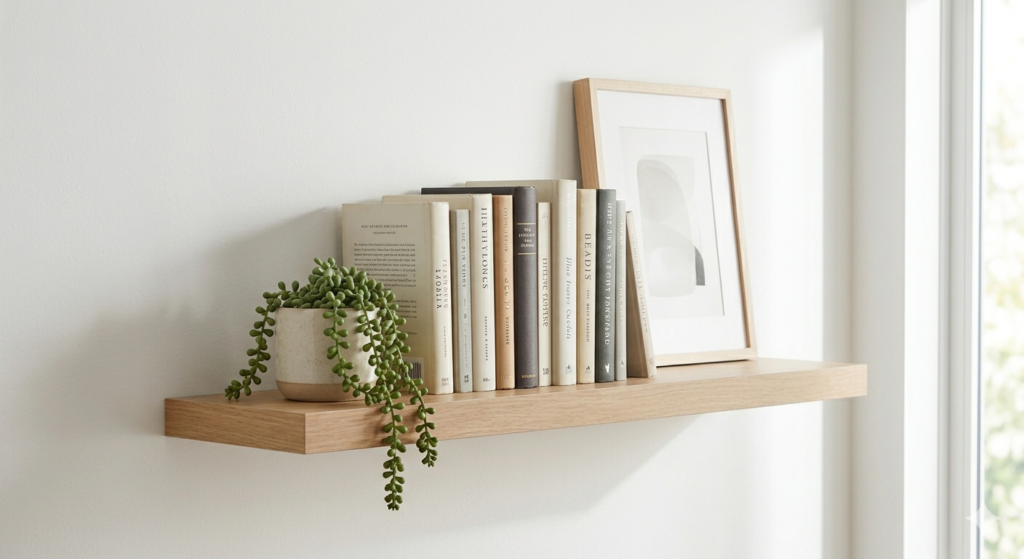
We’ve all been there: you’re staring at a beautiful stack of hardcover books and a perfectly empty wall, but your lease agreement is staring right back at you with a “No Holes in Walls” clause. It’s frustrating. You want that sleek, “floating” look, but you don’t want to spend your weekend patching drywall or, worse, losing your security deposit. Want to build more DIY confidence? These DIY home improvement workshops will take your skills to the next level.
For a long time, the advice was simple: “If you don’t drill, don’t use heavy shelves.” But it’s 2026, and adhesive technology and modular design have come a long way. You can have your books and your deposit too—you just have to be smarter about how you “hang” them. Finding the balance between style and lease agreements is the core of renter-friendly home decor.
Let’s address the elephant in the room. If you try to stick a massive oak shelf to a wall with a few pieces of double-sided tape and load it with encyclopedias, it’s going to end in a loud crash at 3:00 AM.
When we talk about “no-drill” shelving for heavy items, we aren’t just talking about stick-and-peel. We are talking about Load-Bearing Physics. To succeed, you have to understand three things:
The good news? If you pick the right method for your specific wall type, you can absolutely display your favorite novels without a single trip to the hardware store for a power drill. While refreshing your walls with shelves, why not also deep-clean your floors with this easy DIY carpet cleaner recipe?
If you’re a renter in the US, you probably have drywall. The challenge with drywall is that it’s essentially compressed chalk; if you pull too hard on a small area, it crumbles. To hang heavy books, we need to spread that weight out. Here are the three most reliable ways to do it without a drill. Pair your new no-drill shelves with battery operated sconces for a completely wire-free wall setup.
Adhesive technology has leaped forward. Forget the tiny strips used for posters; we are talking about industrial-strength polymer adhesives.
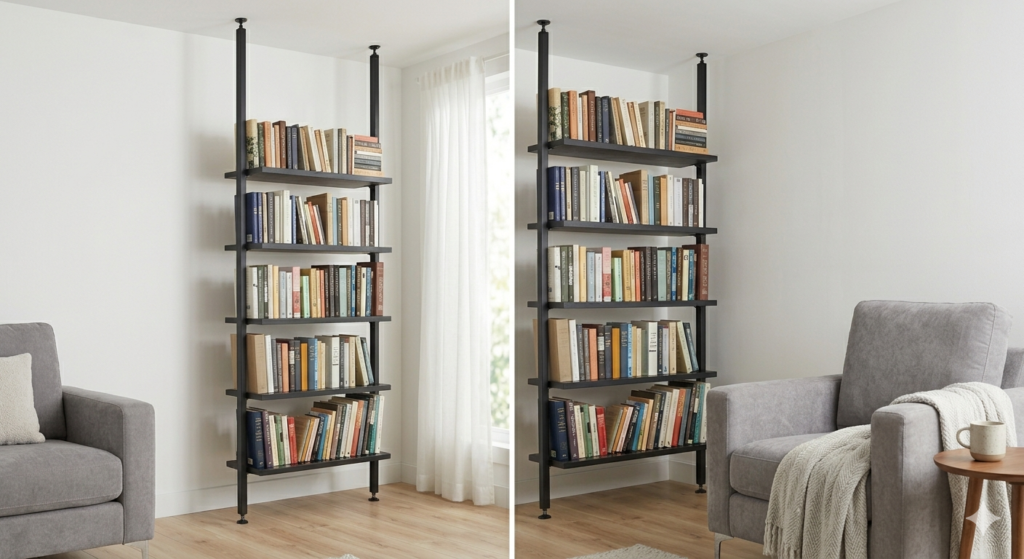
If you have a massive collection—think thick textbooks or encyclopedias, adhesives might make you nervous. This is where Tension Shelving comes in. In 2026, these have become a staple for “industrial-chic” apartment decor.
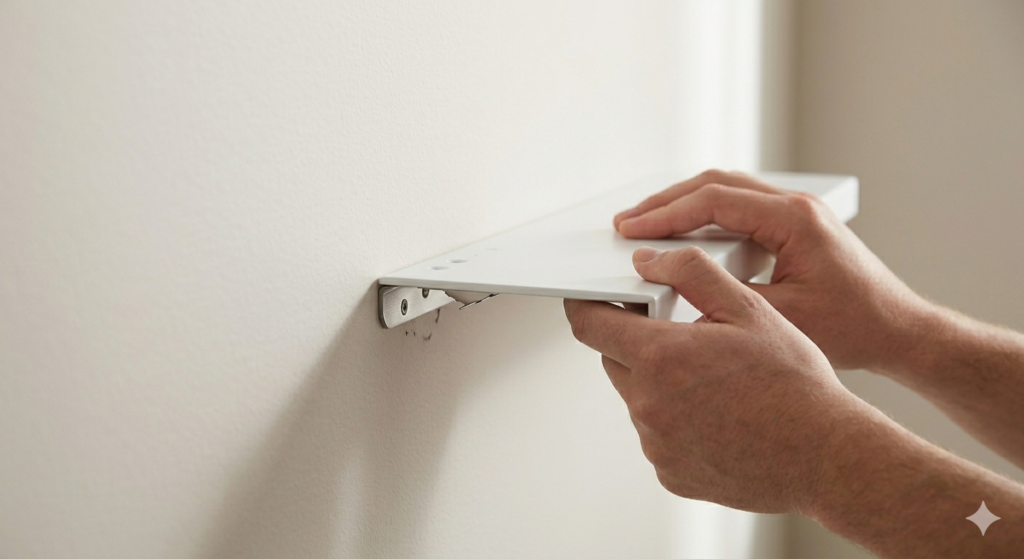
This is a hybrid method that has taken the US market by storm. While it technically makes tiny pin-sized marks, most US lease agreements consider these “normal wear and tear,” similar to a thumb tack. For a professional-grade library, the IKEA ELVARLI post system is the US standard for no-drill shelving.
Installing a drill-free shelf isn’t just about sticking it to the wall and walking away. If you’re planning on stacking actual books, you need to treat this like a mini-engineering project. Follow these steps to ensure your library doesn’t end up on the floor.
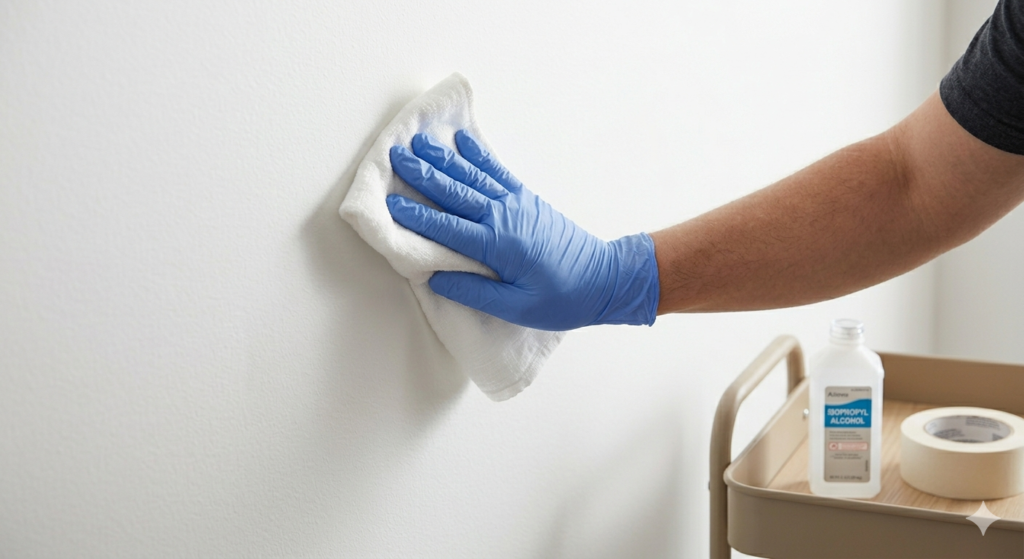
Most people skip this, and it’s why their shelves fall. Your walls are covered in invisible layers of dust, oils from your hands, and maybe even some cooking grease if you’re in an open-plan apartment. Renters should also keep an eye out for black mold in the shower. Here’s how to identify and remove it safely.
A floating shelf that is even slightly tilted will eventually “walk” its way off the wall because gravity will pull the books toward the lower end.
This is the hardest part: Patience. Most heavy-duty adhesives (like those from Command or industrial mounting tapes) need time to “cure.” This means the chemical bond needs to harden before it can take a load.
When the wait is over, don’t just dump your books on there. Understanding the density of standard US drywall is key to knowing why ‘claws’ work better than tape.
Even with the best prep, some environments are “shelf-killers.” Keep an eye out for these:
Not all “no-drill” shelves are created equal. When shopping in the US, you’ll likely find these at Target, Lowe’s, or IKEA. Here is how they stack up for your heavy book collection:
| Product Name | Best For | Weight Capacity | Surface Compatibility |
| High & Mighty Floating Shelf | Hardcovers & Plants | 15 – 25 lbs | Drywall Only |
| IKEA ELVARLI (Post System) | Full Libraries | 40 – 79 lbs | Floor-to-Ceiling |
| Command Picture Ledge | Thin Paperbacks | 5 lbs | Smooth Painted Walls |
| Threshold (Target) Ledges | Decor & Small Books | 10 – 15 lbs | Drywall (with Claw) |
The “Budget” Pick: Threshold (Target) offers great aesthetic wood ledges that often use the “push-in claw” technology.
The “Heavyweight” Pick: If you have more than 30 books, stop looking at adhesives and get the IKEA ELVARLI. It’s the only way to store a true library without drilling. Always refer to the official 3M weight capacity guide to ensure your specific strip matches your book weight.
If removed correctly, no. The trick is to use a hairdryer to heat the adhesive for 30 seconds before pulling. This softens the bond so it doesn’t take the top layer of drywall paper with it.
A standard 24-inch “High & Mighty” shelf can hold about 8–10 average hardcovers. Always check the weight of your books first. A typical hardcover weighs about 1.5 to 2 lbs.
Generally, no. Adhesives need a flat surface to bond. For textured walls, your best bet is a Tension Rod system or the Claw method, which bypasses the surface texture and grips the interior of the wall.
For a DIY fix, Bostik No More Nails or 3M Industrial Mounting Tape are the gold standards in 2026. However, remember that these are semi-permanent and much harder to remove than Command strips.
At the end of the day, your home should inspire you, not stress you out about a falling shelf. If you are a book lover with a serious collection, the Tension Pole method is your best friend. If you just want to display a few “aesthetic” favorites, the High & Mighty or Heavy-Duty Adhesives will give you that clean, floating look you’re after. Mastering no-drill shelving is just one of many budget home improvement projects that can add value to your space.
Pro Tip: Always test your shelf with one or two “sacrificial” books for a few days before loading it with your rare first editions!