Physical Address
304 North Cardinal St.
Dorchester Center, MA 02124
Physical Address
304 North Cardinal St.
Dorchester Center, MA 02124
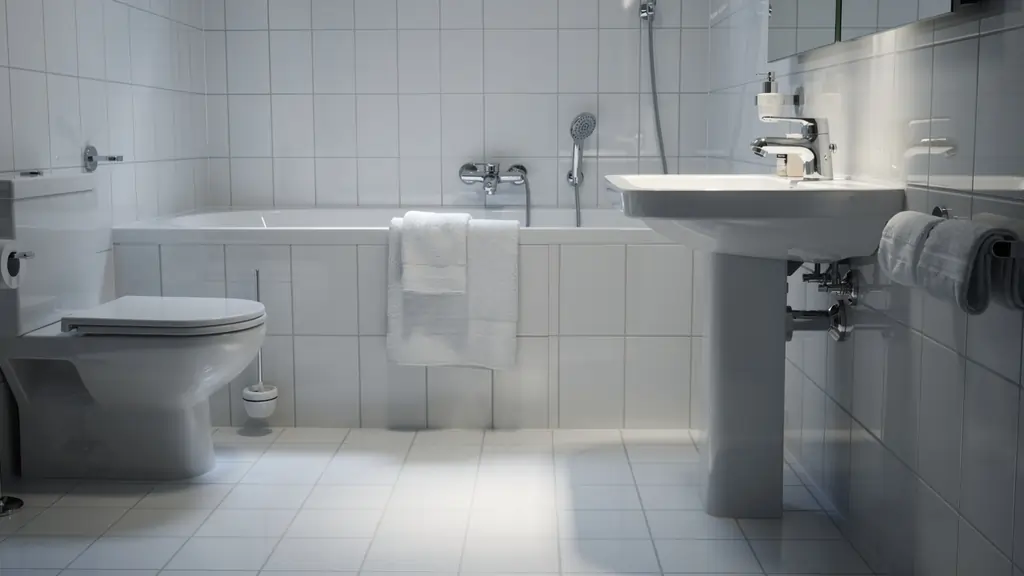
Have you scrubbed the toilet? You wiped every surface. You mopped the floor and changed the towels. And yet — within a day, sometimes within hours — that smell is back.
This is one of the most common home cleaning frustrations, and it has a specific reason: the problem almost never lives on the surfaces you can see. It lives in places you never think to check. Bathroom odours that persist after cleaning are almost always coming from hidden moisture, bacterial growth in drains, plumbing failures, or grout and caulk that has absorbed years of contamination.
This guide works through all six real causes in order of likelihood, with a clear fix for each one. If you have also been dealing with condensation on your bathroom windows alongside the smell, our guide on how to stop condensation on apartment windows covers the humidity side of the same problem.
Narrowing down the type of smell before you start troubleshooting saves a lot of time:
| The smell is… | Most likely source — check first |
| Sewage or rotten eggs, strongest near the drain or toilet | Dry P-trap, failed wax ring, or blocked vent pipe (Cause #1 & #2) |
| Stale urine despite cleaning the toilet | Hidden urine under the toilet seat, in grout, or at the toilet base (Cause #3) |
| Musty or mildew-like, not sewage | Drain biofilm, damp towels/bath mats, or mould in caulk and grout (Cause #4 & #5) |
| Chemical or stale after using cleaner | Poor ventilation — the smell is your cleaning products mixing with damp air (Cause #6) |
Under every drain in your bathroom — sink, shower, bathtub, and floor drain — there is a U-shaped section of pipe called the P-trap. Its job is to hold a small pool of standing water that forms a seal against sewer gases. When that water evaporates, the seal disappears and sewer gas travels directly up through your drain and into the bathroom.
This is most common in guest bathrooms or holiday homes that go unused for weeks, but it can also happen in regularly used bathrooms during very hot, dry weather when evaporation is faster than the drain is used.
Run water down every drain in the bathroom for 30 seconds. This refills the P-trap and restores the water seal. For floor drains that are rarely used, pour a cup of water down the drain weekly to maintain the seal. If the smell keeps returning quickly even after running water, the trap itself may be cracked or the drain vent may be blocked — in which case a plumber is needed.
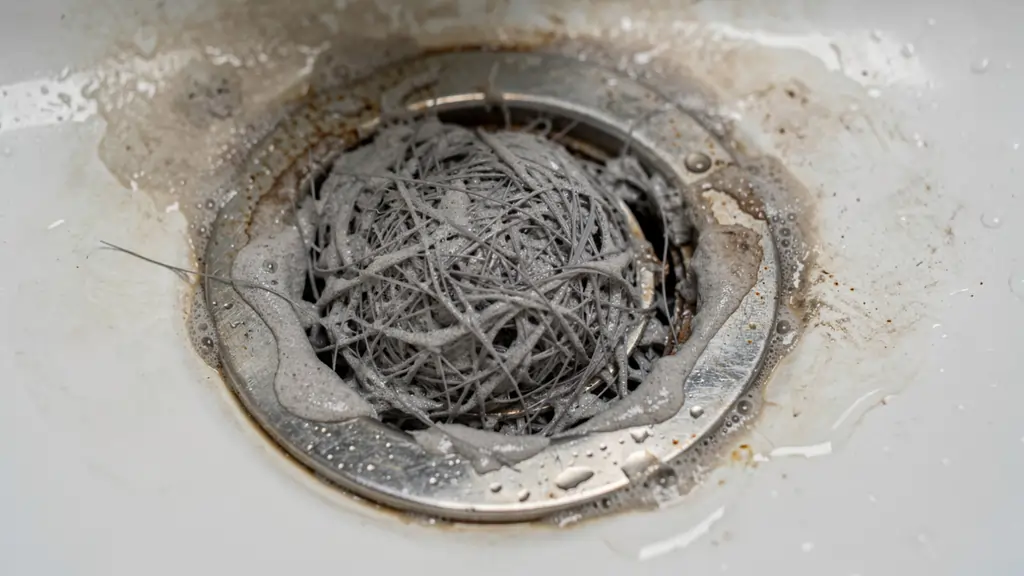
Even when your drain appears to be draining normally, a partial buildup of hair, soap scum, skin cells, and toothpaste residue inside the drain pipe creates a warm, moist environment where bacteria thrive. This bacterial colony — called biofilm — produces sulphur compounds as it breaks down organic matter. The result is a persistent smell that can be musty, egg-like, or simply stale, and that no amount of surface cleaning will fix because the source is inside the pipe.
The toilet bowl itself is easy to clean and rarely the source of persistent smell. The sources that survive standard cleaning are the ones you cannot easily see or reach.
Urine splashes accumulate inside the hinge mechanisms, under the bolt caps at the back of the seat, and in the groove where the seat attaches to the bowl. Standard wiping does not reach these spots. Over time, bacteria break down the uric acid trapped there and produce ammonia compounds — a sharp, persistent smell that returns within hours of cleaning.
The fix: Remove the toilet seat completely. Most seats are held by two bolts that unscrew from beneath the bowl rim. Soak the entire seat in a cleaning solution for 20 minutes, paying specific attention to the hinges and bolt holes. Wipe down the area on the bowl where the seat was attached before reattaching.
If your toilet rocks even slightly when you sit on it. The wax ring seal between the toilet and the floor drain has likely failed. Wastewater and urine seep into the gap between the toilet base and the floor with every flush. This soaks into grout and under flooring where no cleaning product can reach it.
Test for this by pressing your hands on either side of the toilet base and rocking gently. Any movement at all indicates a compromised seal. Replacing a wax ring is a manageable DIY project for a confident homeowner, though a plumber can do it in under an hour. The EPA has guidance on when to call a professional for bathroom plumbing issues — a failed wax ring qualifies.
Old, cracked, or stained grout around the toilet base absorbs urine over months and years. Ordinary cleaning does not penetrate grout. The only real fix is to re-grout or recaulk around the toilet base with fresh bathroom sealant, sealing new material over clean, dry surfaces.
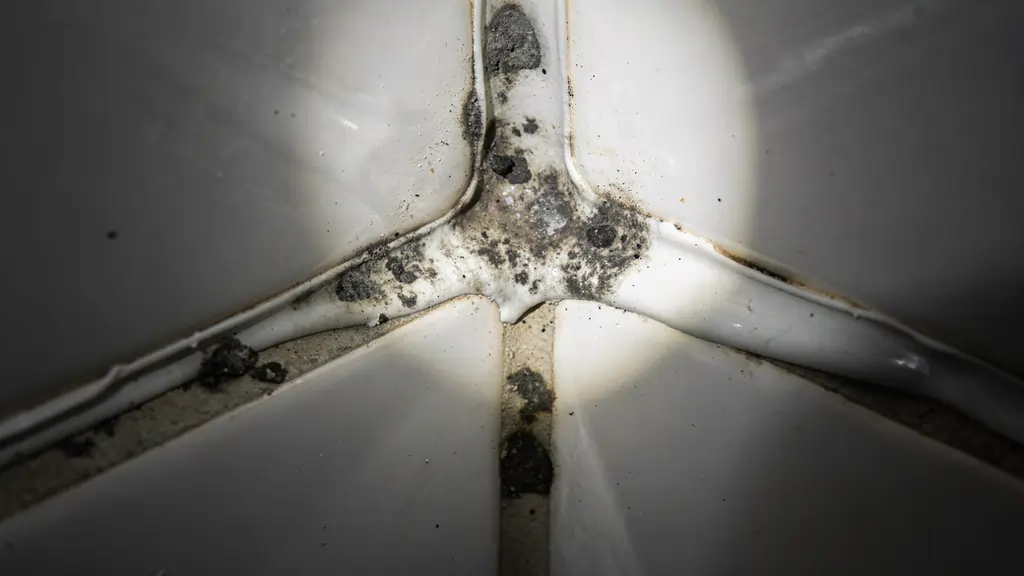
Mould in tile grout and silicone caulk is not just a visual problem. It produces microbial volatile organic compounds (MVOCs) — gases that create a characteristic musty, earthy smell. Because mould grows into porous grout rather than sitting on top of it, surface cleaning with a spray cleaner only removes the visible surface growth while leaving the root structure (hyphae) intact. The smell and the mould return within days.
Most people never open the toilet tank, but the inside is a warm, dark, damp environment where bacteria, mould, and mineral deposits accumulate over years. If the tank smells stale or musty when you open it, that smell is being flushed into the bowl and the room with every use.
Even when all the sources above are addressed, a bathroom without adequate ventilation will continue to smell stale. The problem is not the cleaning — it is that moisture, cleaning product residue, and normal bathroom air have no way to leave the room.
If the smell is sewage-like, the most likely cause is a dry P-trap or a failed toilet wax ring seal — both of which allow sewer gas into the room. Surface cleaning will not fix either of these. Run water down every drain and check whether the toilet rocks at the base. If the smell persists, a plumber can diagnose the exact source quickly.
The smell is almost certainly trapped in grout, under the toilet seat bolts, or seeping from beneath the toilet base where the wax ring has failed. Remove and deep-clean the toilet seat, scrub the grout around the toilet base with an enzymatic cleaner, and test the toilet for any rocking movement. Enzymatic cleaners are the only products that chemically break down uric acid — standard bathroom sprays mask it temporarily.
Musty smells after cleaning almost always come from drain biofilm, mould in grout or caulk, or damp towels and bath mats that are not drying fully. Address the drain first — pull out any hair and debris and flush with baking soda and vinegar. Then check the grout and caulk for mould spots, and ensure your extractor fan is working effectively.
Yes. The inside of the toilet tank is rarely cleaned and accumulates bacterial slime and mineral deposits over time. Open the lid and check — if it smells when you do, clean it with white vinegar and a long-handled brush. The smell is flushed into the room with every use.
Surface cleaning weekly keeps visible areas fresh. A deeper clean targeting the drain, toilet seat hinges, grout lines, and tank interior once a month will prevent the hidden sources from building up. The extractor fan grille should be wiped down monthly and the ductwork checked seasonally.
A bathroom that smells after cleaning is not a hygiene failure — it is a targeting problem. You have been cleaning the surfaces and missing the sources. Work through the six causes above one at a time. Starting with the P-trap and the drain, and you will find the culprit. In most cases it is something fixable in under an hour with tools you already have at home.
For the bigger picture on bathroom and home maintenance, bookmark our complete seasonal home maintenance checklist. It covers exactly when and how to address each of these issues before they become a problem.