Physical Address
304 North Cardinal St.
Dorchester Center, MA 02124
Physical Address
304 North Cardinal St.
Dorchester Center, MA 02124
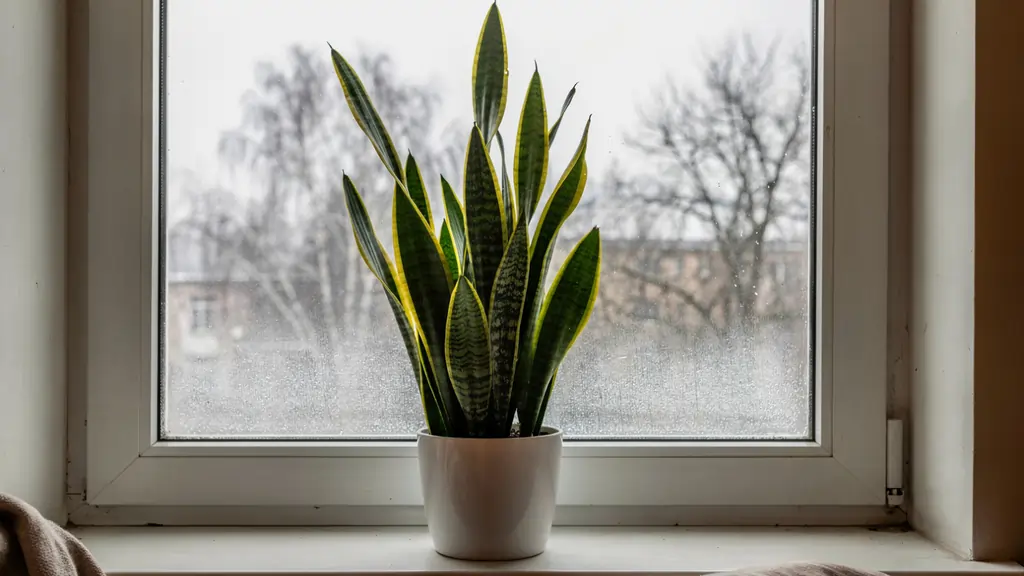
If your snake plant has been coasting through summer on neglect — occasional watering, whatever light it gets, no particular attention — winter is when that approach needs a small but important adjustment.
Snake plants (Dracaena trifasciata, formerly Sansevieria trifasciata) go dormant in winter. Their growth slows almost completely, their water needs drop dramatically, and the threats that can kill them — overwatering, cold draughts, being too close to a radiator — all increase. Getting through winter with a healthy plant is mostly about knowing what to stop doing, not what to start.This guide covers every aspect of winter care for a snake plant in an apartment, from adjusting your watering schedule to finding the right spot on a cold grey day. If you are also growing pothos, take a look at our guide on how to propagate pothos in water — a great winter project when your plants are dormant and you want something to do.
Snake plants are native to the tropical and subtropical regions of West Africa, where temperatures are consistently warm and there is no true winter dormancy in the wild. In an apartment, however, shorter days, lower light levels, and cooler room temperatures trigger the plant into a natural dormancy cycle. During dormancy, the plant’s metabolism slows, it uses water more slowly, and its ability to recover from stresses like overwatering or root disturbance is significantly reduced.
Understanding this one fact — that your snake plant is running in low-power mode from roughly October to February — explains every specific care instruction in this guide.
Overwatering in winter is the single most common way to kill a snake plant, and it is usually the most well-meaning plant owners who do it. The plant looks the same as it did in summer, so people water it on the same schedule — and the roots rot quietly in cold, wet soil before any visible symptoms appear.
| Plant size / pot | Summer watering | Winter watering |
| Small plant, 4-inch pot | Every 2–3 weeks | Every 4–5 weeks |
| Medium plant, 6-inch pot | Every 2–4 weeks | Every 5–6 weeks |
| Large plant, 8-inch+ pot | Every 3–4 weeks | Every 6–8 weeks |
| Any size — the real rule | When top 2 inches are dry | When ALL the soil is completely dry |
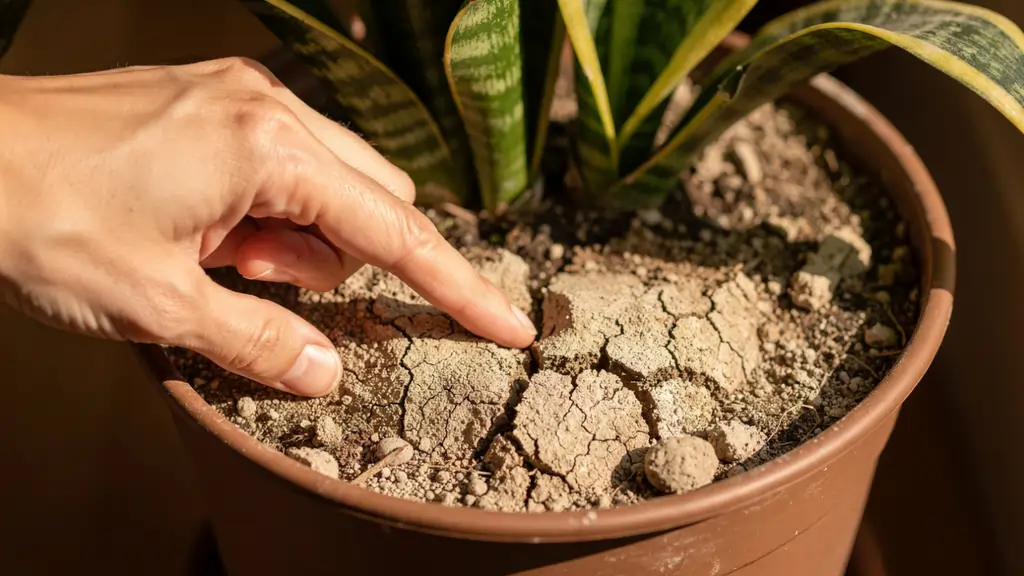
These schedules are guidelines — the soil check is always the actual decision-maker. Push your finger all the way down to two inches. In winter, do not water until the soil feels completely dry at that depth, not just dry on the surface.
Snake plants are famous for tolerating low light, and they genuinely can — but in winter, when natural light is reduced by shorter days and lower sun angles, even tolerant plants can begin to struggle if the light drops too far.
A window ledge in winter can be significantly colder than the rest of the room — particularly at night. Snake plants are sensitive to temperatures below 50°F (10°C) and will develop cold damage on the leaves closest to the cold glass. Move the plant a few inches back from the glass once the temperature drops, especially overnight.
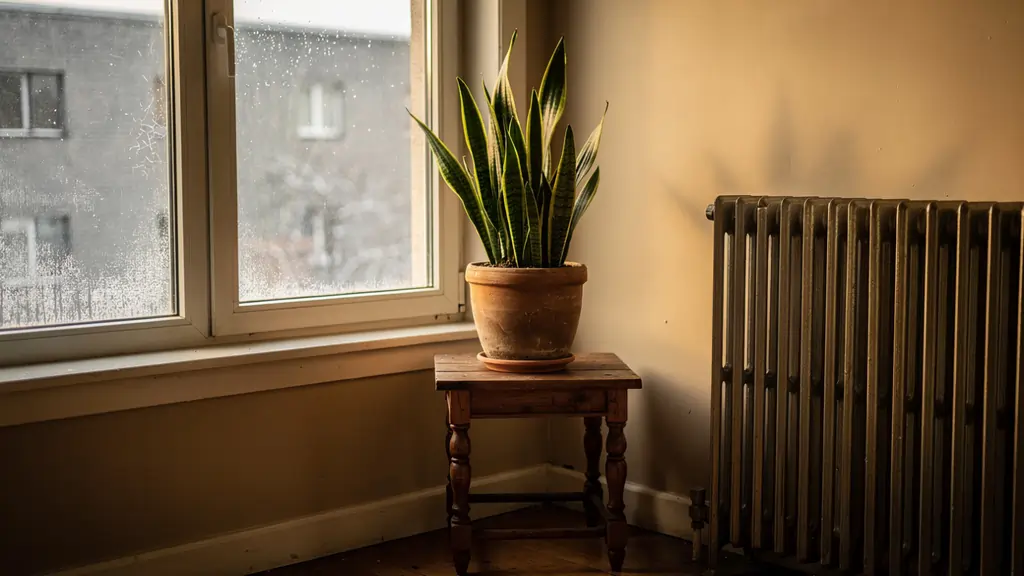
Temperature is the winter threat most apartment gardeners overlook. Snake plants need warmth, and winter apartments create two specific extremes that both cause damage:
Cold damage on snake plant leaves appears as soft, water-soaked patches that turn brown or mushy. These patches do not recover — the affected sections of leaf die permanently.
Stop completely. Do not fertilise snake plants in winter. The plant is dormant and not actively growing, so it cannot process fertiliser effectively. Unused mineral salts build up in the soil and damage the roots. Resume feeding with a diluted balanced liquid fertiliser once in spring (April) and once in early summer.
Avoid repotting between October and February. Repotting disturbs the root system, and a dormant plant has very limited ability to recover from root disturbance. If the plant is severely pot-bound and urgently needs repotting, do it in late February as the plant begins to emerge from dormancy — not mid-winter.
Winter is a poor time to start new snake plant propagations, Dracaena trifasciata. Root development slows significantly in cold, low-light conditions. Wait until March or April, when longer days and rising temperatures give new cuttings the energy they need to develop roots.
Water once every four to eight weeks, depending on the size of the pot and how dry your apartment is. The only reliable guide is the soil push your finger all the way to two inches and only water when the soil is completely dry at that depth. In winter, err on the side of waiting longer.
Overwatering is the most likely cause in winter, when the plant’s water consumption drops significantly. Follow the finger test and ensure the pot has drainage holes. For a full guide to yellowing snake plants, see our article on why ZZ plants turn yellow. The causes and fixes are very similar for both plants.
No. Windowsills in winter can drop to near or below 50°F (10°C) at night. Which is below the threshold snake plants can tolerate without leaf damage. Move the plant a few feet back from the glass in winter, or at minimum bring it away from the sill overnight.
No. The plant is dormant and cannot use fertiliser. Adding fertiliser to a dormant plant causes salt build-up in the soil that damages the roots. Wait until spring indoor herb garden. A single feed in April and one in early summer is all a snake plant needs in a full year.
No. Snake plants in dormancy typically produce no new leaves at all between October and February. This is completely normal. Once light levels increase in late February and March, new growth emerges from the base. A healthy dormant plant should look exactly the same in February as it did in October just the same leaves, same size, no change.
Winter snake plant care comes down to one fundamental shift: your plant needs less from you, not more. Less water, no fertiliser, no repotting, no propagating. Your job for the next four months is mostly to resist the urge to intervene.
Find a warm, reasonably bright spot away from cold windows and hot radiators. Check the soil every two weeks, and water only when it is completely dry. That is genuinely all you need to do. In March, when the light comes back and new shoots start pushing up from the base, you will know it worked.
While your snake plant rests, it is a great time to try something more active. Our guide on how to grow mint in a small pot without it spreading is a beginner-friendly project that rewards you with something you can actually cook with.