Physical Address
304 North Cardinal St.
Dorchester Center, MA 02124
Physical Address
304 North Cardinal St.
Dorchester Center, MA 02124

You wake up on a cold morning and the windows are dripping. Again. The glass is fogged over, the window sill is damp, and somewhere in the back of your mind a small worry starts to form: is that mould starting on the frame?
Window condensation in winter apartments is one of the most common maintenance complaints there is — and one of the most misunderstood. Most people assume it means something is wrong with the windows or the building. In most cases, it does not. It means the air inside your apartment holds more moisture than the cold glass surface can handle. The good news is that the fix is almost always within your control, even as a renter.This guide covers what is actually causing the condensation in your apartment, why you should not ignore it for too long, and five practical fixes that work — most of which require no landlord permission, no specialist tools, and no significant spending. If you have already noticed black spotting around the window frames, jump to the mould prevention section, and also take a look at our guide on why your bathroom might be developing similar moisture problems for a broader picture.
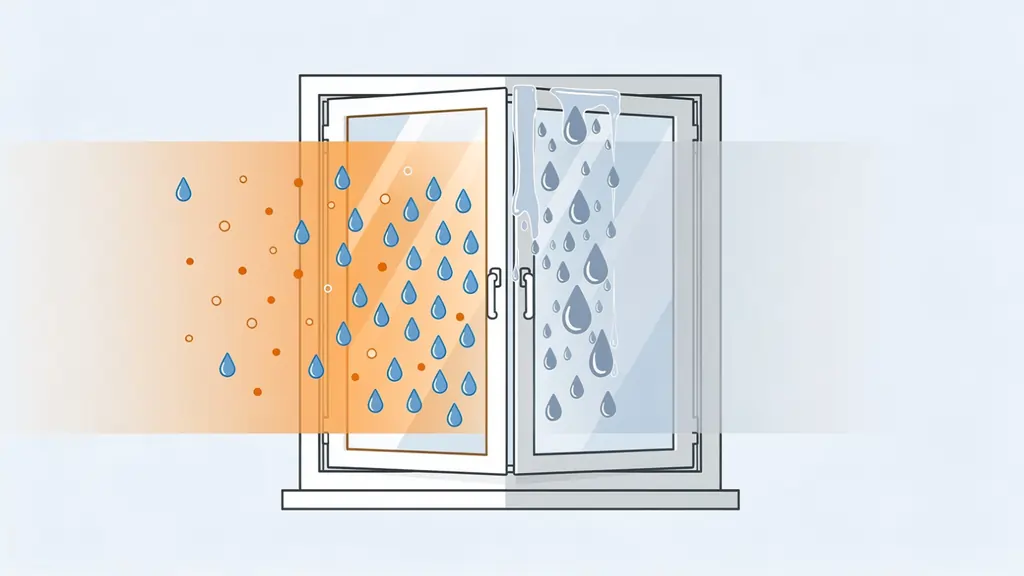
Before you can fix the problem, it helps to understand why it is happening — because that changes which solution works best for your specific situation.
Warm air holds more moisture than cold air. When the warm, humid air inside your apartment comes into contact with the cold surface of a window pane in winter, the air cools rapidly and can no longer hold all of its moisture. That excess moisture has to go somewhere, and it deposits itself as liquid water on the glass. This is condensation.
In apartments specifically, a few things make this worse than in standalone homes. Apartments tend to be more tightly sealed, which means moisture from cooking, showering, breathing, and even houseplants has fewer ways to escape. Single-glazed windows — common in older apartment buildings — get far colder than double-glazed ones, making condensation more likely and more severe.
The ideal indoor relative humidity (RH) for winter is between 30% and 50%. Above 55%, condensation becomes likely on cold surfaces, and above 60%, mould growth becomes a real risk. A basic digital hygrometer — available for a few dollars — tells you exactly where your apartment sits.
A little condensation on a cold morning is normal and will clear on its own as the room warms up. But when it is happening every day, soaking the window sill, or leaving visible wet patches on the frame — that is worth addressing quickly.
If you are a renter and mould has already appeared on walls or frames, the EPA has clear guidance on when mould becomes a landlord’s responsibility — and it is worth knowing your rights before the problem grows. Document everything with photographs and report it to your landlord in writing.
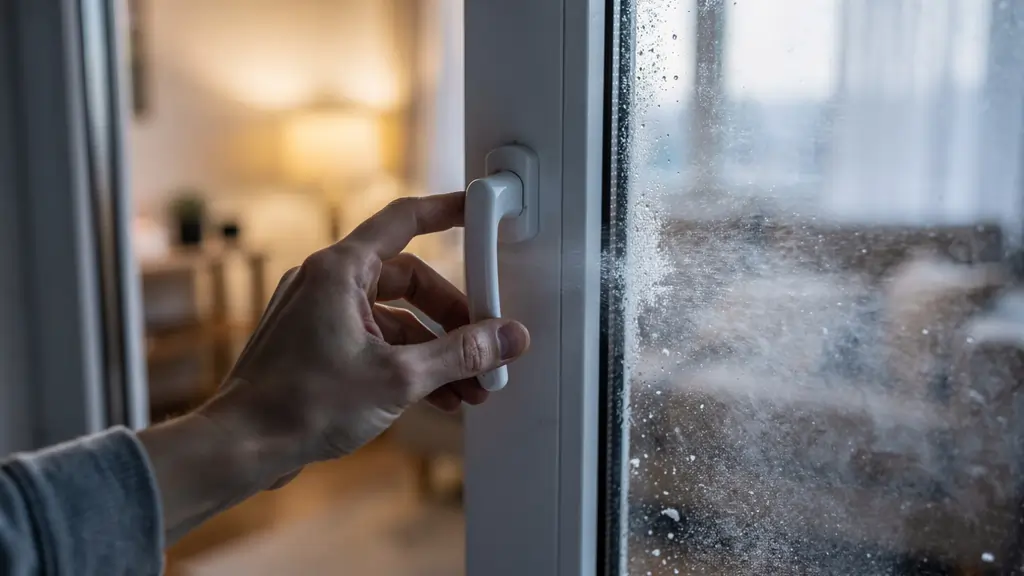
These five fixes are ordered from cheapest and simplest to slightly more involved. Start with the first two — they resolve the majority of condensation problems in apartments without spending a penny.
This is the most effective single change you can make, and it costs nothing. Condensation forms because moisture has nowhere to go. Ventilation gives it an escape route.

Even with good ventilation, if you are constantly generating high levels of moisture inside a sealed apartment, condensation will persist. Reducing the sources of indoor humidity is the other half of the solution.
If ventilation and moisture reduction have not solved the problem — particularly in bedrooms where condensation persists overnight — a small portable dehumidifier is the most targeted fix available.
A compact 1.5 to 2 litre dehumidifier placed in the bedroom or living room draws moisture directly out of the air before it can reach the cold window glass. You will be surprised how much water it collects overnight in a humid apartment.

Single-pane windows are the primary cause of severe winter condensation. Their glass surface gets extremely cold, and no amount of dehumidifying fully compensates when the temperature differential is large enough. Insulating window film is the renter-friendly solution to this — it creates an additional air pocket between the film and the glass that raises the surface temperature and dramatically reduces condensation.
Self-adhesive window insulation film kits are widely available and cost very little. They apply from the inside, leave no permanent marks if removed correctly, and are entirely reversible — making them a viable option for renters without landlord permission in most tenancy agreements.
A secondary benefit: the film also reduces draughts and can noticeably lower heating costs by improving the window’s insulation value.
If condensation is happening despite your best efforts — particularly on very cold nights — daily wiping is the most important damage-limitation step. The problem is not the condensation itself, but what happens to it once it sits on the frame.
Mould needs moisture sitting on a surface for 24 to 48 hours to begin growing. If you wipe the glass and frame dry every morning before the condensation soaks in, you break that cycle.
When to involve your landlord:
If mould keeps returning quickly after cleaning, if there is visible dampness in the walls surrounding the window, or if the window frame is crumbling or rotting — these are structural issues that are your landlord’s legal responsibility to fix. Document with photos and report in writing. Keep copies of all correspondence.
Relevant resource:The Minnesota Department of Health renter mould guide covers what tenants can be expected to fix themselves versus what requires landlord action.
If you are short on time, use this table to find the right starting point for your situation.
| Your situation | Best starting fix | Cost |
| Condensation on one or two windows, mostly in the morning | Fix #1 — Improve ventilation | Free |
| Condensation throughout the apartment, especially after cooking or showering | Fix #2 — Reduce moisture sources | Free |
| Heavy overnight condensation in bedroom despite ventilation | Fix #3 — Use a dehumidifier | $25–$60 |
| Single-pane windows that are extremely cold to the touch | Fix #4 — Apply insulating window film | $10–$25 |
| Early mould visible on frames or sills | Fix #5 — Daily wiping and anti-mould treatment | Under $5 |
| Structural dampness, mould returning in days, walls affected | Report to landlord in writing — this is not DIY territory | Free |
A small amount of condensation on cold mornings is normal — warm indoor air meeting cold glass will always produce some moisture. The problem starts when it is happening all day, every day, soaking frames and sills. That level of condensation indicates indoor humidity is too high, and it needs addressing before mould sets in.
Yes — if condensation sits on window frames and sills repeatedly without being dried, mould will begin to grow within 24 to 48 hours under the right conditions. Mould exposure can cause coughing, congestion, throat irritation, and worsen asthma. The American Lung Association recommends keeping indoor humidity below 50% to significantly reduce the risk.
Between 30% and 50% relative humidity. Below 30% the air becomes uncomfortably dry. Above 55% you will see regular condensation on cold windows, and above 60% mould growth becomes likely. A basic digital hygrometer costs a few dollars and gives you an accurate reading at a glance.
In most tenancy agreements, applying removable insulating window film falls under minor cosmetic changes that do not require permission, since the film leaves no permanent marks when removed correctly. However, tenancy terms vary — check your lease first. When in doubt, a quick written message to your landlord asking permission is always cleaner than dealing with a dispute later.
Bedrooms are the worst because you are breathing and sweating for eight hours with the door closed and little to no airflow. Two adults sleeping produce roughly half a litre of water vapour overnight. Cracking the bedroom window just slightly before bed, or using a small dehumidifier in the room, resolves the issue for most people.
For everyday condensation caused by normal activities like cooking and showering, tenants are generally responsible for managing indoor humidity through ventilation. However, if the condensation is caused by structural issues — failed window seals, broken ventilation, inadequate insulation — that is your landlord’s legal responsibility. The EPA mould guidance and your local housing authority can help you understand the distinction.
Window condensation in winter apartments is almost always a humidity problem, not a window problem. The moisture is already in your air — from cooking, showering, breathing, and drying clothes — and the cold window is just where it becomes visible.
Start with ventilation and moisture reduction: they fix the majority of condensation problems without spending a single dollar. If the problem persists, a dehumidifier or window film will handle the rest. And if mould has already appeared, wipe it before it establishes — and do not ignore it if it keeps coming back.If you found this useful, our guide on how to fix peeling paint on walls without repainting the whole room tackles another common apartment moisture side-effect — and our complete renter-friendly home improvement guide covers everything you can fix or upgrade in a rental without drilling a single hole.