Physical Address
304 North Cardinal St.
Dorchester Center, MA 02124
Physical Address
304 North Cardinal St.
Dorchester Center, MA 02124
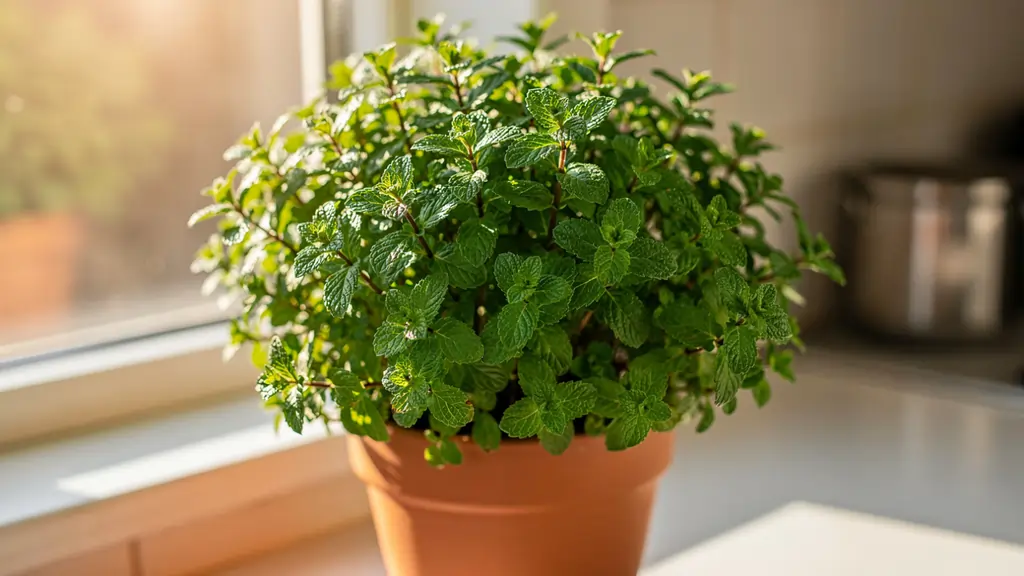
Mint is one of those plants that exists in two modes. In a pot, it is a generous, productive, endlessly useful kitchen herb that keeps giving throughout the growing season. In a garden bed, it is a garden thug that spreads through underground runners, surfaces in places you did not plant it, and takes three seasons of persistent effort to remove.
Growing mint in a container is not just the safer option — it is actually the better growing method. Confined roots encourage the plant to grow up rather than out, producing denser, more flavourful leaves. You control the environment. You can move it indoors when frost comes. And you can keep several varieties going at once, which is something you cannot do in the ground without them eventually crossing and muddling their flavours.This guide covers everything you need to know about growing mint successfully in a container — what pot to use, how to stop it spreading, how to prune it to keep it productive, and how to keep it going through winter. If you enjoy growing useful plants from scratch, our guide on how to propagate pothos in water shows the same patient, rewarding approach applied to another incredibly forgiving plant.
Mint spreads through horizontal underground stems called rhizomes. These run outward in all directions, just below the surface, sending up new shoots wherever they go. A single mint plant in open soil can spread to cover four or five square feet in a single season, pushing into neighbouring plants and appearing in cracks in paths.
A pot stops this completely. The walls of the container block the rhizomes, forcing all growth upward and inward where you can manage it. This is the only containment method that is fully reliable.
Even if you want to grow mint in the ground, the solution is still a pot — plant the pot directly into the soil with the rim sitting two to three inches above ground level. The slight elevation prevents stems from rooting over the top of the pot into the surrounding soil.
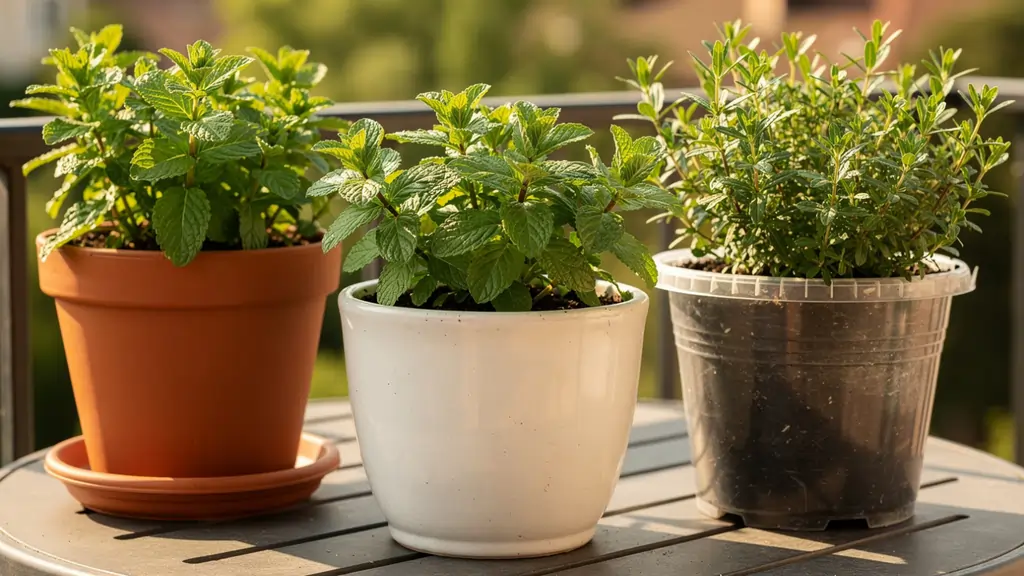
Mint grows better in pots with ample surface area rather than significant depth — the roots spread horizontally. A pot that is twelve inches in diameter is the minimum for a productive plant. Wider is better than taller.
Grow each mint variety in its own pot. Different mints cross-pollinate easily through the soil and root systems, and their distinctive flavours — peppermint, spearmint, apple, chocolate — blur together over time in shared containers. Keeping them separate preserves the flavour profile of each variety.
Mint is not fussy about soil, but it has clear preferences. Use a standard potting compost — one that is described as moisture-retentive rather than very free-draining. Mint likes consistent moisture and struggles in soil that dries out completely between waterings, unlike cacti or snake plants. Adding a small amount of perlite improves drainage slightly without letting it dry out too fast.
Mint grows best in full sun to partial shade — at least four to six hours of direct sunlight per day for maximum leaf production. A south-facing or east-facing windowsill is ideal indoors. In very hot climates or during peak summer heat, afternoon shade actually improves the flavour by slowing the essential oil evaporation that makes mint taste milder as temperatures rise.
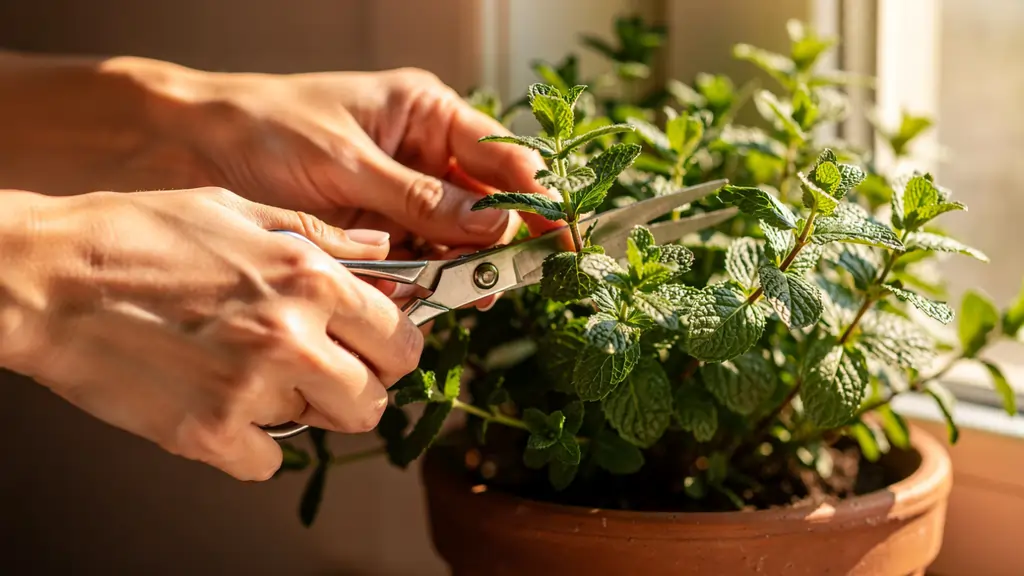
This is the single most impactful thing you can do for a container mint plant. Pruning regularly — even just pinching out the growing tips with your fingers — makes the difference between a sparse, leggy plant and a dense, productive one.
When you cut or pinch the tip of a mint stem, the stem stops growing upward and instead produces two new shoots from the nodes just below the cut. Each of those shoots can be pinched again to produce two more. After a season of regular pinching, a single plant can produce dozens of stems where there was one.
When mint begins to flower — usually from midsummer onward — the leaves become smaller, the flavour diminishes, and the plant puts all its energy into seed production rather than leaf growth. Cut flowering stems back to the base as soon as you see flower buds forming. If the plant has already flowered, cut all stems back to just above soil level. It will regrow vigorously within two to three weeks.
Mint is a herbaceous perennial — it dies back to the roots in autumn and regrows from them every spring. In a container outdoors, the plant will die back to soil level with the first hard frosts and regrow in March or April.
| Variety | Best use | Key note |
| Spearmint (Mentha spicata) | Cooking — sauces, salads, tea, new potatoes | Classic versatile mint; the most widely available |
| Peppermint (Mentha x piperita) | Tea, desserts, cocktails | Higher menthol content; stronger flavour than spearmint |
| Apple mint (Mentha suaveolens) | Tea, fruit salads, Pimm’s | Softer flavour; fuzzy leaves; excellent for beginners |
| Chocolate mint | Desserts, hot chocolate, baking | Distinctive cocoa-mint scent; dark stems |
| Moroccan mint | Tea (traditional North African mint tea) | Very sweet, very aromatic; exceptional dried |
Keep the pot elevated — off the ground on a saucer, a pot stand, or a paved surface — so that runners cannot exit propagate mint cuttings through the drainage holes and root into the ground below. Trim stems that trail over the pot edges before they touch the soil. Divide and repot every two to three years to prevent the plant from becoming so root-bound that the rhizomes force their way out.
Check the top inch of soil daily in summer and water when it feels dry. In hot weather, a pot in full sun may need daily watering. In winter, water very infrequently ZZ plant — once every two to three weeks, checking that the soil has dried out between waterings.
Yes, on a sunny windowsill with at least four hours of light. The plant grows more slowly indoors than outdoors and may become slightly leggy if light is limited, but it stays productive through winter. Supplementing with a basic grow light significantly improves indoor winter growth.
The two most common causes are overwatering (soggy soil, yellowing lower leaves, root rot smell) and underwatering (dry soil, wilting despite watering). Check the drainage — a pot without drainage holes will kill mint regardless of how carefully you water. A second common cause is flowering: if the plant has gone to flower and not been cut back, it diverts all energy to seeds and the leaves deteriorate. Cut it back hard.
Pinch out the growing tips regularly — every time a stem has four to six pairs of leaves, remove the top two. Do this consistently throughout the growing season. Each pinched stem produces two new shoots, doubling the plant’s branching with every harvest. This is the most reliable way to transform a sparse, leggy mint plant into a dense, productive one.
Moroccan mint for a traditional, sweet mint tea. Peppermint for a stronger, more medicinal cup. Apple mint for a gentler, more floral flavour. Spearmint is the most versatile all-rounder that works well in both cooking and tea. Growing all four in separate pots lets you blend to taste.
Mint is one of the most satisfying herbs to grow precisely because it rewards the simple acts of pruning and harvesting. The more you take from it, the more it gives back. A pot on your kitchen windowsill provides more fresh mint than you will likely ever use — and in the process, teaches you more about how plants grow than almost any houseplant will.Now that your Week 1 gardening cluster is complete, the next natural step is putting your home herb garden into context — our complete indoor herb garden guide covers everything from choosing a starter kit to getting your first real harvest.