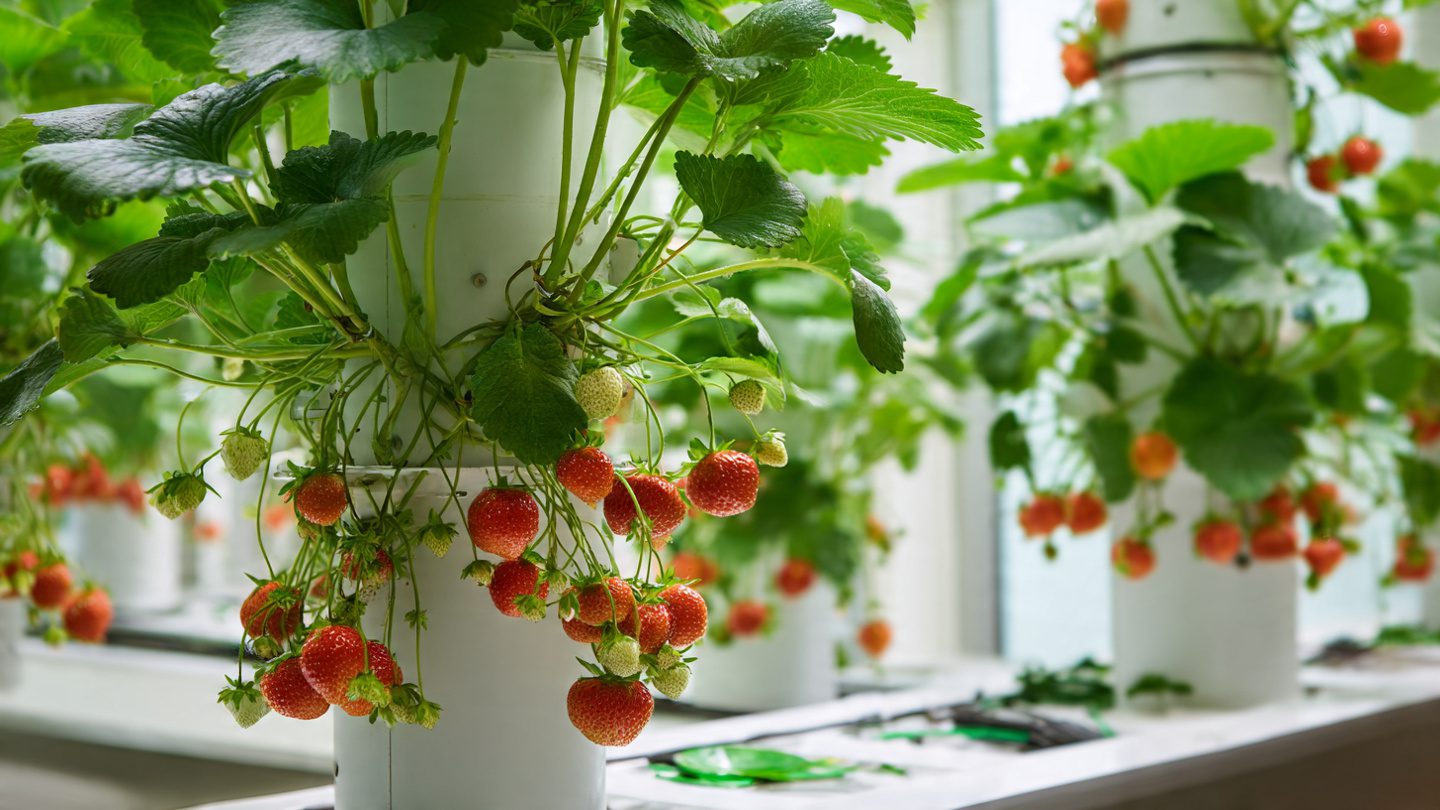
Indoor hydroponic strawberry garden with vertical towers and LED lights

Hydroponic Strawberries Not Fruiting? Easy Indoor Growing Guide

What Are Hydroponic Strawberries?

Hydroponic strawberries are strawberry plants grown without soil, using a nutrient-rich water solution instead. Instead of relying on traditional soil for nutrients, the roots are supported in a controlled environment where they receive everything they need directly through water. This method is known as soilless cultivation, and it allows for faster growth, cleaner produce, and better control over plant health. If you love growing food indoors, these low-maintenance indoor herb garden ideas are the perfect next step.

Hydroponic systems such as NFT (Nutrient Film Technique), drip systems, or vertical towers are commonly used to grow strawberries efficiently indoors or in small spaces. Because the environment is controlled, growers can reduce common soil-related problems like pests, diseases, and inconsistent nutrient levels.

Why Grow Strawberries Hydroponically Indoors?

Growing strawberries indoors using a hydroponic system offers several advantages, especially for home gardeners looking for convenience and year-round production.

  • Year-round harvesting: Indoor hydroponic strawberries are not dependent on seasons
  • Space-saving setups: Ideal for apartments, balconies, or small homes
  • Cleaner and healthier plants: No soil means fewer pests and diseases
  • Faster growth rate: Plants receive nutrients directly, improving efficiency

For beginners, indoor hydroponics may seem complex at first, but once the system is set up, it becomes a low-maintenance and highly rewarding way to grow fresh strawberries at home. Mint is another herb that thrives in indoor containers, learn how to grow mint in a pot without it spreading.

Benefits of Soilless Strawberry Cultivation

Soilless strawberry cultivation is becoming increasingly popular due to its efficiency and sustainability. Here are some key benefits:

  • Better nutrient control: You can adjust pH and nutrient levels precisely
  • Water efficiency: Hydroponic systems use significantly less water than soil gardening
  • Higher yield potential: With optimal conditions, plants produce more fruit
  • Reduced risk of soil-borne diseases
  • Suitable for urban gardening and indoor environments

By understanding how hydroponic strawberries work, you’ll be better prepared to identify issues like fruiting problems and fix them effectively.

Why Hydroponic Strawberries Are Not Fruiting

Even the healthiest-looking hydroponic strawberry plants can sometimes fail to produce fruit. Understanding the root causes is essential for fixing the problem and boosting your harvest. Below are the most common reasons strawberries grown hydroponically do not fruit.

1. Lack of Proper Lighting

Strawberries need sufficient light to flower and produce fruit. Indoors, natural sunlight is often insufficient. Without proper lighting:

  • Plants may grow leaves but fail to develop flowers
  • Flowering may be delayed, reducing overall yield

Fix: Use full-spectrum LED grow lights for 12–16 hours per day. Adjust the height to prevent leaf burn but provide enough light for flowering buds. For a complete soil-free setup, these indoor herb garden kits work beautifully alongside hydroponic systems.

2. Poor Pollination

Strawberries grown indoors rely on pollination to set fruit. Without wind or insects:

  • Flowers may remain unpollinated
  • Fruit may not form, or may be deformed

Fix: Hand pollinate using a soft brush or use a small fan to simulate airflow. Some growers use electric toothbrushes to vibrate flowers gently, mimicking pollinators.

3. Nutrient Imbalance

Hydroponic strawberries require a balanced nutrient solution. Too much or too little of certain elements can prevent fruiting:

  • Excess nitrogen: Promotes leaf growth but reduces flowers
  • Low phosphorus or potassium: Essential for flower development and fruiting

Fix: Use a hydroponic nutrient formula designed for strawberries. Monitor pH (5.5–6.5) and EC levels (1.2–2.0) regularly.

4. Incorrect Temperature and Humidity

Environmental conditions play a big role in fruit production:

  • Optimal temperature: 18–24°C (65–75°F)
  • Relative humidity: 60–70%

Too cold or too hot can stress plants and prevent flowering. High humidity may encourage fungal problems that reduce fruit set.

Fix: Maintain consistent temperature and humidity using climate control tools if growing indoors.

5. Plant Age and Variety Issues

Not all strawberry varieties fruit at the same time, and young plants may require time to mature. Some common issues:

  • Newly transplanted plants may need 4–6 weeks before flowering
  • Day-neutral vs. short-day varieties may affect fruiting schedules

Fix: Choose varieties suited for hydroponic indoor growth, and be patient with young plants.

How to Fix Hydroponic Strawberries Not Fruiting

If your hydroponic strawberries are not fruiting, the good news is that most issues are easy to fix with proper care and adjustments. Below are the most effective solutions to help your plants flower and produce sweet, healthy fruit.

Improve Lighting Conditions

Light is one of the most critical factors for flowering and fruiting.

Tips:

  • Use full-spectrum LED grow lights to mimic natural sunlight.
  • Provide 12–16 hours of light daily for flowering and fruiting stages.
  • Keep lights 12–18 inches above plants to avoid leaf burn while ensuring adequate coverage.

Proper lighting stimulates photosynthesis, encourages flower bud development, and improves fruit quality.

Ensure Proper Pollination

Indoor strawberries may not receive natural pollination from insects or wind, which prevents fruit formation.

Tips:

  • Hand pollination: Use a soft brush or small paintbrush to transfer pollen between flowers.
  • Electric toothbrush method: Gently vibrate flowers to mimic pollinator activity.
  • Air circulation: Place a small fan nearby to simulate airflow and help pollen spread.

Optimize Nutrient Solution

A balanced nutrient solution is crucial for flower and fruit development.

Tips:

  • Use strawberry-specific hydroponic nutrients.
  • Maintain pH between 5.5–6.5 for optimal nutrient uptake.
  • Keep EC levels around 1.2–2.0 depending on the plant growth stage.
  • Reduce excess nitrogen, which promotes leaves but inhibits flowering.

Maintain Ideal Growing Environment

Temperature and humidity directly affect flowering and fruiting.

Tips:

  • Keep temperature between 18–24°C (65–75°F).
  • Maintain humidity at 60–70% to prevent fungal diseases while encouraging fruit set.
  • Avoid sudden temperature drops or drafts that can stress plants.

Select the Right Varieties and Plant Age

Not all strawberry plants fruit at the same time, and plant maturity matters.

Tips:

  • Use day-neutral or everbearing varieties for consistent indoor fruiting.
  • Be patient with young transplants they may need 4–6 weeks before flowering.
  • Rotate older plants and replace them if they stop producing.

Best Hydroponic Systems for Strawberries

Choosing the right hydroponic system is crucial for healthy fruiting and maximizing yield. Different systems offer unique advantages depending on your indoor space, budget, and experience level.

NFT (Nutrient Film Technique)

The NFT system is one of the most popular setups for hydroponic strawberries. It uses a shallow stream of nutrient-rich water that flows over the roots.

Benefits:

  • Continuous nutrient supply for faster growth
  • Efficient water and nutrient usage
  • Ideal for compact indoor setups

Tips:

  • Ensure a slight slope (1–3%) for proper water flow
  • Monitor EC and pH levels regularly

Drip System

In a drip hydroponic system, nutrient solution is delivered directly to the base of each plant via small emitters.

Benefits:

  • Easy to scale for larger indoor gardens
  • Reduces water waste compared to flood-and-drain systems
  • Allows precise control of nutrients per plant

Tips:

  • Check emitters regularly to avoid clogging
  • Adjust drip frequency depending on plant growth stage

Vertical Hydroponic Towers

Vertical towers are perfect for small spaces or home balconies. Plants grow in stacked layers, saving floor space while maximizing yield.

Benefits:

  • Space-saving and aesthetically pleasing
  • Suitable for growing multiple strawberry plants indoors
  • Excellent for day-neutral varieties that produce continuously

Tips:

  • Ensure top and bottom layers receive adequate light
  • Use a recirculating pump for even nutrient distribution

Choosing the Right System for Beginners

  • NFT: Best for small to medium indoor gardens, requires careful monitoring
  • Drip: Versatile and scalable, ideal for beginners who want control
  • Vertical towers: Perfect for compact spaces, visual appeal, and moderate maintenance

Choosing the right hydroponic system will reduce stress on your strawberries and increase the chances of successful fruiting.

Indoor Growing Tips for Healthy Strawberry Plants

Growing strawberries indoors using a hydroponic system can be highly rewarding, but success requires attention to detail. Here are essential tips to keep your plants healthy and fruiting abundantly.

Choose the Right Strawberry Variety

Not all strawberry varieties thrive in hydroponic indoor setups.

Recommendations:

  • Day-neutral (everbearing) varieties: Produce fruit continuously throughout the growing season
  • Short-day varieties: Fruit only during specific times of the year, suitable for seasonal indoor setups
  • Popular choices for hydroponics: Albion, Seascape, and Mara des Bois

Choosing the right variety ensures consistent flowering and fruiting.

Ensure Adequate Light

Light is critical for photosynthesis and fruit production:

  • LED grow lights: Provide full-spectrum light and energy efficiency
  • Duration: 12–16 hours per day for optimal flowering and fruiting
  • Positioning: Keep lights 12–18 inches above plants to prevent leaf burn

Proper lighting increases yields and improves fruit quality.

Monitor Nutrients and Water

Hydroponic strawberries rely entirely on nutrient solutions:

  • pH: 5.5–6.5 for optimal nutrient uptake
  • EC: 1.2–2.0 depending on plant age
  • Avoid over-fertilization, which can damage roots and reduce flowering

Maintain Proper Temperature and Humidity

Indoor environments can fluctuate, affecting fruit production:

  • Temperature: 18–24°C (65–75°F)
  • Humidity: 60–70% to reduce fungal risk while promoting fruit set
  • Use fans, heaters, or humidifiers as needed to stabilize conditions

Common Beginner Mistakes to Avoid

  • Overcrowding plants, which reduces airflow and increases disease risk
  • Ignoring nutrient imbalances that hinder flowering
  • Skipping pollination for indoor plants
  • Using inappropriate strawberry varieties for hydroponics

By avoiding these mistakes, you’ll improve plant health and ensure a higher fruit yield.

Tips to Increase Hydroponic Strawberry Yield

Even healthy hydroponic strawberries can benefit from targeted strategies to improve flowering, fruiting, and overall harvest. Here are actionable tips to boost your indoor strawberry yield.

Prune and Train Your Plants

Proper pruning encourages healthy growth and more flowers:

  • Remove dead or yellow leaves regularly to improve airflow
  • Trim runners (long horizontal stems) if you want more fruit rather than new plants
  • Support plants with stakes or trellises to prevent bending or breakage

Pruning focuses the plant’s energy on producing flowers and fruit instead of excessive foliage.

Optimize Flowering

To increase fruit set, focus on flower stimulation:

  • Ensure adequate light exposure (12–16 hours per day)
  • Maintain temperature between 18–24°C for optimal flowering
  • Check nutrient levels, especially phosphorus and potassium, which are essential for flower and fruit development

Improve Pollination

Even indoor hydroponic strawberries require proper pollination to produce full, healthy berries:

  • Use a soft brush or electric toothbrush to transfer pollen between flowers
  • Allow airflow from a small fan to mimic wind pollination
  • Hand pollinate consistently during flowering to increase fruit set

Maintain Nutrient Balance

Balanced nutrition is key for maximum yield:

  • Keep pH between 5.5–6.5
  • Maintain EC 1.2–2.0 depending on plant stage
  • Avoid excess nitrogen; it promotes leaf growth at the expense of flowers

Rotate and Replace Older Plants

Strawberry plants have a limited fruiting period:

  • Remove older plants after 12–18 months or after reduced fruit production
  • Introduce new plants to maintain continuous harvests
  • Consider using everbearing varieties for consistent fruiting year-round

Frequently Asked Questions (FAQs)

These are the most common questions about hydroponic strawberries and their fruiting problems. Providing clear answers helps readers troubleshoot quickly and boosts your chances of appearing in Google’s featured snippets.

Why are my hydroponic strawberries flowering but not fruiting?

Sometimes flowers appear but fail to develop into fruit. Common causes include:

  • Poor pollination indoors
  • Excess nitrogen in the nutrient solution
  • Incorrect temperature or humidity
    Solution: Hand-pollinate flowers, adjust nutrients, and maintain optimal environmental conditions.

How long do hydroponic strawberries take to fruit?

  • Young transplants: 4–6 weeks to produce flowers
  • Day-neutral varieties: Can fruit continuously once established
  • Short-day varieties: Flower and fruit only during certain periods
    Proper lighting, nutrients, and pollination accelerate fruiting.

Do hydroponic strawberries need pollination?

Yes, indoor hydroponic strawberries usually require manual or assisted pollination:

  • Hand pollinate using a soft brush or electric toothbrush
  • Ensure airflow with a small fan to mimic natural wind
  • Proper pollination results in larger, uniform fruits

What is the best pH for hydroponic strawberries?

  • Optimal pH range: 5.5–6.5
  • Correct pH ensures nutrients are absorbed efficiently
  • Regularly check pH and EC to prevent nutrient deficiencies

Can I grow strawberries year-round indoors?

Yes, with the right setup:

  • Use day-neutral or everbearing varieties
  • Maintain consistent lighting, temperature, and humidity
  • Regularly monitor nutrient solutions and plant health

Final Thoughts

Growing hydroponic strawberries indoors can be a highly rewarding experience, but it requires understanding common fruiting challenges and how to fix them. By improving lighting, ensuring proper pollination, maintaining balanced nutrients, and controlling temperature and humidity, you can encourage healthy flowering and increase your yield.

Choosing the right hydroponic system, selecting suitable strawberry varieties, and avoiding common beginner mistakes will set you up for long-term success. Remember, patience is key young plants need time to mature and start fruiting.

With the tips outlined in this guide, you can confidently troubleshoot issues and enjoy fresh, sweet strawberries all year round without relying on soil.