Physical Address
304 North Cardinal St.
Dorchester Center, MA 02124
Physical Address
304 North Cardinal St.
Dorchester Center, MA 02124
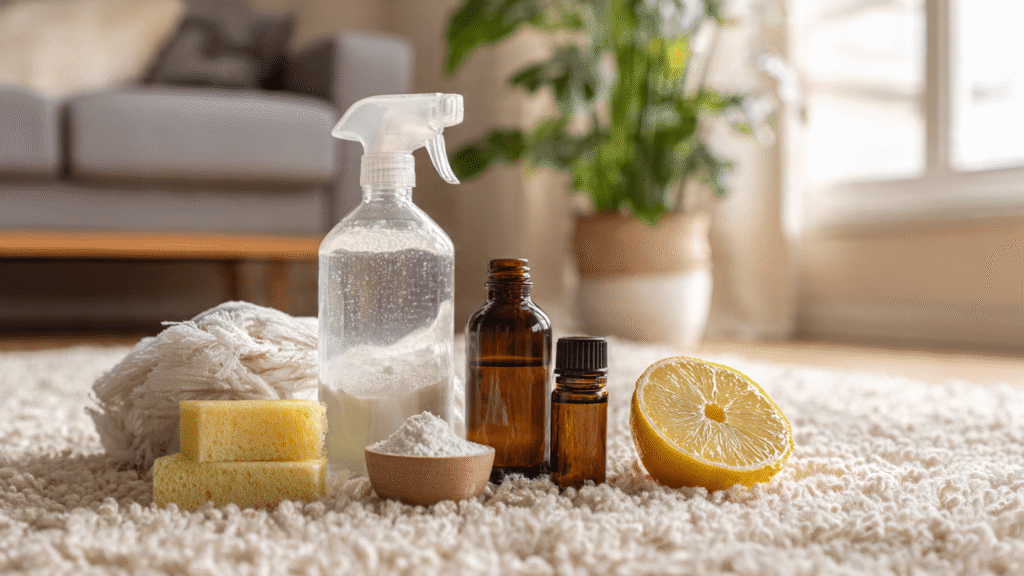
Store-bought carpet cleaners often cost $15–$30 a bottle and contain a long list of synthetic chemicals that most of us can’t pronounce. Carpet cleaning is just one of many ways to maintain your home yourself. If you want to expand your DIY home improvement skills, we have a full guide on hands-on workshops and classes. The good news is that you don’t need any of them. A few simple pantry ingredients, white vinegar, baking soda, and dish soap are genuinely effective at cleaning carpets, removing odors, and treating the most common stains.
This guide covers everything: the core ingredients and what each one actually does, four distinct recipes for different situations, a stain-by-stain treatment guide, and the mistakes that make things worse. Whether you have pets, kids, or just a high-traffic living room, there’s a solution here that works. While keeping floors clean, don’t overlook black mold in the shower. Here’s how to remove it safely.
Commercial carpet cleaners rely on surfactants, solvents, and enzymes to break down stains. The DIY versions use the same principles, just with food-safe, naturally occurring versions of those same chemicals. White vinegar is a mild acid that breaks down mineral deposits, bacteria, and odor-causing compounds. Baking soda is a base that neutralizes acidic stains and physically absorbs moisture and odor. Dish soap is a surfactant that lifts grease and holds dirt particles in suspension so they can be blotted away.
Together, these three ingredients handle the vast majority of what gets dropped, tracked, or spilled onto a carpet in a normal household. They won’t replace professional steam cleaning for deep-set contamination, but for regular maintenance and most common stains, they work, and they cost a fraction of the commercial alternatives.
“The best homemade carpet cleaner isn’t the one with the most ingredients — it’s the one you actually have on hand when you need it.”
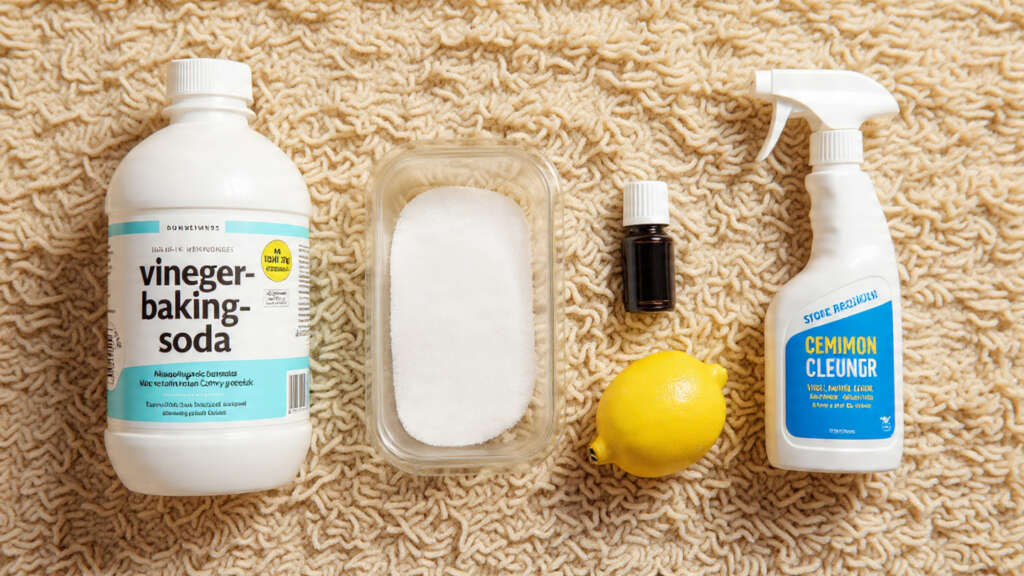
Before mixing anything, it helps to understand what each ingredient contributes. This way, you can adjust recipes based on what you’re dealing with or substitute if you’re out of something.
⚠️ Important: Never mix baking soda and vinegar inside a closed spray bottle. They react and produce CO₂ gas, which builds pressure and can cause the bottle to burst. Apply them separately or in a wide open container.
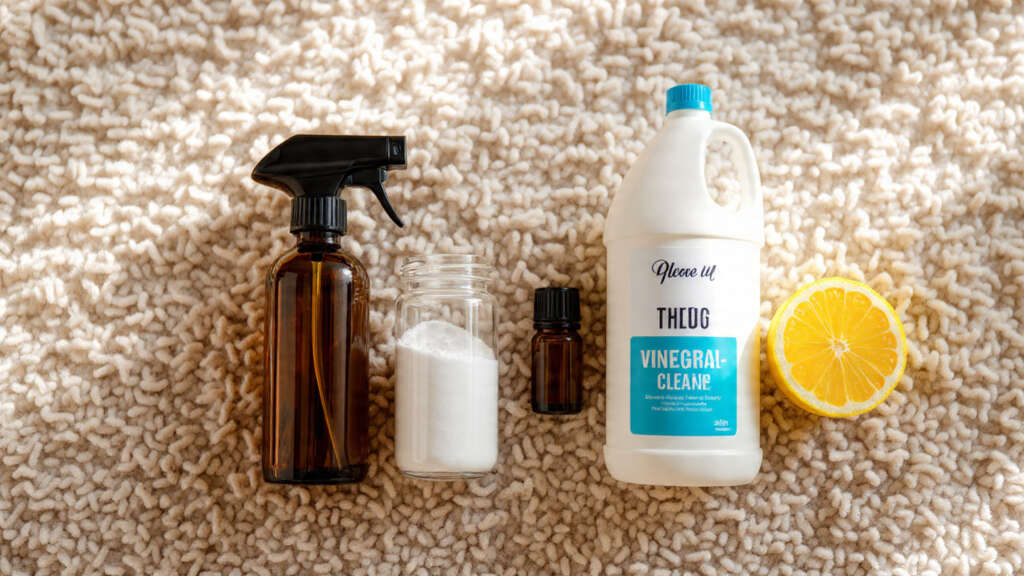
Different problems need different approaches. Here are four distinct recipes, each designed for a specific purpose, with clear instructions and notes on when to use each one. For another easy home upgrade, install floating shelves without drilling using these renter-friendly methods.
The recipe is only half the equation. How you apply and remove the cleaner makes just as much difference to the result.
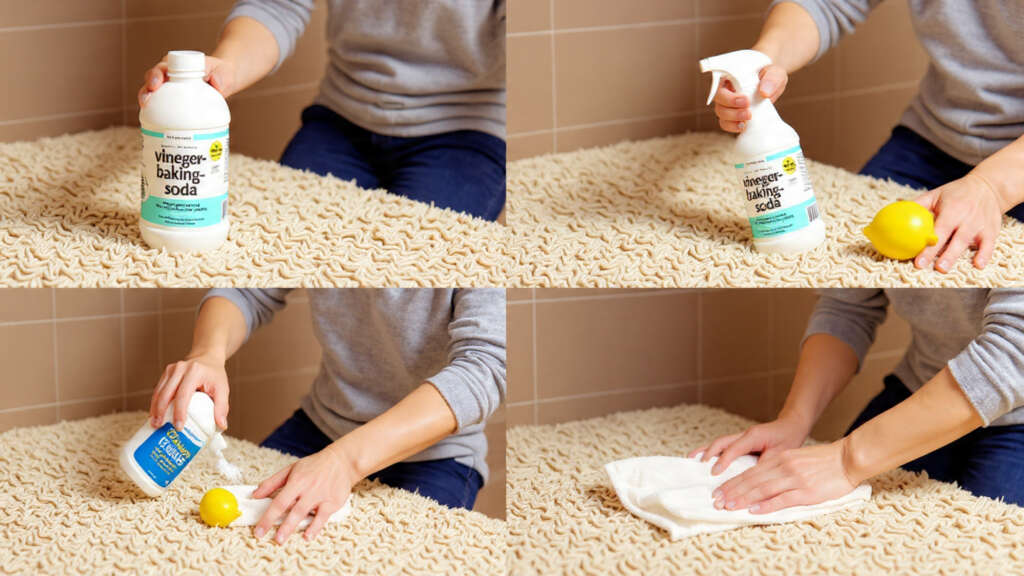
Step 1: Vacuum first. Before applying any liquid, vacuum the area thoroughly. Loose dirt and debris absorb cleaning solution and reduce its effectiveness. A pre-vacuum also makes it easier to see the actual stain you’re targeting.
Step 2: Blot, never rub. Whether you’re dealing with a fresh spill or applying your cleaner, always blot with a clean white cloth. Press straight down and lift. Rubbing drives the stain deeper into the fibers and can permanently damage the carpet pile.
Step 3: Work from the outside in. Start blotting at the outer edge of the stain and work toward the center. Going the other way spreads the stain outward and makes it larger.
Step 4: Don’t over-saturate. Apply your spray lightly and in sections. Too much moisture soaks into the carpet backing and pad, which encourages mold and mildew — especially if the room doesn’t have good airflow.
Step 5: Rinse after cleaning. After blotting up the cleaner, go over the area once more with a cloth dampened in plain cold water. This removes any soap residue that would otherwise attract new dirt and leave a dull patch.
Step 6: Dry thoroughly. Open windows, use a fan, or run a dehumidifier. Don’t walk on the area until it’s completely dry. Sprinkling baking soda on the damp carpet and vacuuming after 30 minutes helps speed up drying and absorb any lingering odors.
Different stains have different chemistry, which means the same approach won’t work on all of them. Here’s what to do for the most common carpet stains in a household.
🔵 Pro Tip: For stains older than 24 hours, a commercial OXY-based cleaner is often more effective than DIY solutions. If repeated attempts fail, stop — over-cleaning can damage fibers. Consider professional cleaning.
Vacuum at least twice a week in high-traffic areas. Most carpet wear and dullness comes not from stains but from abrasive dirt particles ground into the fibers with foot traffic. Regular vacuuming removes these particles before they cause damage.
Use baking soda as a monthly dry deodorizer. Sprinkle it generously across the carpet, leave it for 30 minutes (or overnight for maximum effect), then vacuum it up. It absorbs odor compounds from the fibers without any moisture, ideal for pet households.
Keep a pre-mixed spray bottle ready. Make up a batch of Recipe 1 and keep it under the kitchen sink. The faster you can treat a spill, the better your odds of removing it completely. Speed is the single biggest factor in stain removal. Keeping your carpets clean is part of a broader home maintenance routine. Check out our guides on other essential home maintenance tasks to keep your home in top shape.
Place doormats at every entry. Around 80% of the dirt that ends up in your carpet was walked in from outside. A quality doormat used on both sides of the door dramatically reduces what reaches your carpet in the first place.
Deep clean every 6–12 months. DIY cleaning handles maintenance well, but a full carpet machine clean (either DIY using Recipe 4 or a professional service) once or twice a year removes accumulated deep-set dirt that surface cleaning can’t reach.
Yes — all four recipes in this guide use food-safe ingredients at diluted concentrations. White vinegar, baking soda, and mild dish soap are non-toxic when diluted as instructed. The only ingredient to be careful with is hydrogen peroxide (Recipe 3), which should be kept away from pets and children during application and rinsed thoroughly before use.
Diluted white vinegar is safe for most synthetic carpets (nylon, polyester, olefin). However, it can damage natural fibers like wool, silk, or jute over time. Always patch test first and avoid use on delicate or antique rugs.
Yes — Recipe 4 is designed for carpet machines. Keep soap content low, and avoid laundry detergents or fabric softeners as they create excess suds and residue.
The vinegar smell disappears as the carpet dries (usually within 1–2 hours). Improve airflow with windows or fans. Adding essential oils during cleaning helps mask the smell.
Persistent odor usually means the urine reached the padding. Use an enzyme-based cleaner to break down uric acid crystals. For severe cases, professional cleaning may be required.
Most homes need deep cleaning every 6–12 months. Homes with pets, kids, or allergies benefit from cleaning every 3–6 months. High-traffic areas may need more frequent care.
Making your own carpet cleaner isn’t complicated — and once you understand what each ingredient does, you can adapt the recipes to whatever you’re dealing with. The all-purpose spray handles day-to-day maintenance. The pet cleaner tackles accidents quickly before odors set in. The hydrogen peroxide paste takes on wine and coffee. The machine formula saves you money on every full clean.
The most important habits are the simple ones: vacuum regularly, treat spills immediately, blot rather than rub, and let everything dry thoroughly. Do those consistently and your carpets will stay cleaner for longer than any product on a shelf can promise.
Looking for more home maintenance guides? Explore our DIY & Home Hacks section for more practical, chemical-free cleaning ideas.