Physical Address
304 North Cardinal St.
Dorchester Center, MA 02124
Physical Address
304 North Cardinal St.
Dorchester Center, MA 02124

Every homeowner eventually faces a moment where a YouTube video isn’t quite enough. You understand the principle, but you’re staring at an actual pipe, or an actual tile saw, or an actual load-bearing wall situation, and you’d really prefer to have practiced the skill first before doing it for real in your own home. That’s exactly what DIY workshops and classes are for. Once you’ve learned a new skill in a workshop, you’ll find applying it to practical DIY projects you can tackle at home much more confident and straightforward.
The options available to homeowners in 2026 span a much wider range than most people realise — from genuinely free weekend workshops at the big box stores to multi-week residential woodworking programmes at specialist schools. This guide organises the real resources by format and skill level so you can find what actually works for your goals, schedule, and budget, rather than a generic list of reasons why classes are beneficial. Ready to tackle tougher repairs? Here’s a step-by-step guide on how to replace garage door springs safely.
The most accessible entry point for most homeowners is the free workshop programmes run by the two major home improvement chains. These are genuinely free, require no experience, and cover practical skills that translate directly to real home projects, which makes them an underused resource that’s worth knowing about specifically.
Home Depot’s workshop programme is one of the most practical free DIY education resources available to US homeowners. In-store workshops are typically held on Saturday mornings and cover specific practical skills — drywall repair, painting techniques, tile installation, lawn care, and plumbing basics are among the most popular sessions. Workshops are hands-on and taught by store associates, running approximately 1–2 hours.
Their Homeowner 101 series is particularly well-suited to new homeowners — covering 17 indoor projects with step-by-step guidance, from installing a ceiling fan to fixing a leaky faucet. The sessions are free and designed to be immediately actionable. Home Depot also offers free virtual workshops for those who can’t attend in-store, accessible through their website.
Lowe’s launched its DIY-U (DIY University) platform in 2022 and has since expanded it into live in-store Home Repair Workshops available at over 100 US locations on weekends. Unlike Home Depot’s pre-scheduled Saturday morning format, Lowe’s workshops at participating stores run throughout the day as drop-in interactive demos — no registration required. Topics include toilet repair and replacement, faucet installation, outlet and switch replacement, and drywall patching.
For online learning, Lowe’s maintains an extensive how-to video library covering virtually every common home improvement project — a strong complement to the in-store hands-on sessions. The Kids Workshop programme (free monthly Saturday sessions for children) is also worth noting for families who want to build practical skills across generations.
🌿 Getting the most from store workshops: These sessions are designed for genuine beginners and move at a pace that accommodates people with no prior experience. If you already have basic skills, the value is less in the instruction and more in having a professional on hand to answer specific questions about your project while you practice. Bring a photo of your actual problem or project instructors almost always help with specifics.

This Old House is the gold standard for homeowner DIY education — a 45-year-old programme that has produced thousands of detailed, expert-presented how-to videos covering virtually every home improvement skill from basic plumbing to full house renovation. The video library is free to access online and is consistently cited by homeowners as the most reliable resource for following a complex repair through from start to finish. Tom Silva’s general contracting guidance in particular is consistently recommended by experienced DIYers as the most trustworthy source for structural and carpentry work.
Udemy’s home improvement category has grown substantially and now includes comprehensive structured courses covering full home repair curricula, electrical basics, plumbing fundamentals, and more. The platform’s “Comprehensive Home Repair and Improvement” course — one of its top-rated offerings — covers nearly every common repair task in systematic detail. Udemy frequently runs promotions reducing prices from $50+ to under $15, making structured multi-hour courses very accessible. Courses are self-paced with lifetime access, allowing you to revisit specific modules before tackling a project.
Skillshare’s strength is creative DIY — furniture refinishing, home décor projects, upholstery, macramé, and interior design are particularly well-covered. The platform offers a subscription model giving access to all courses rather than per-course purchase, which makes it cost-effective for homeowners who want to explore multiple creative project types. Less suited to structural or trade skills; better suited to aesthetic and craft-oriented home improvement.
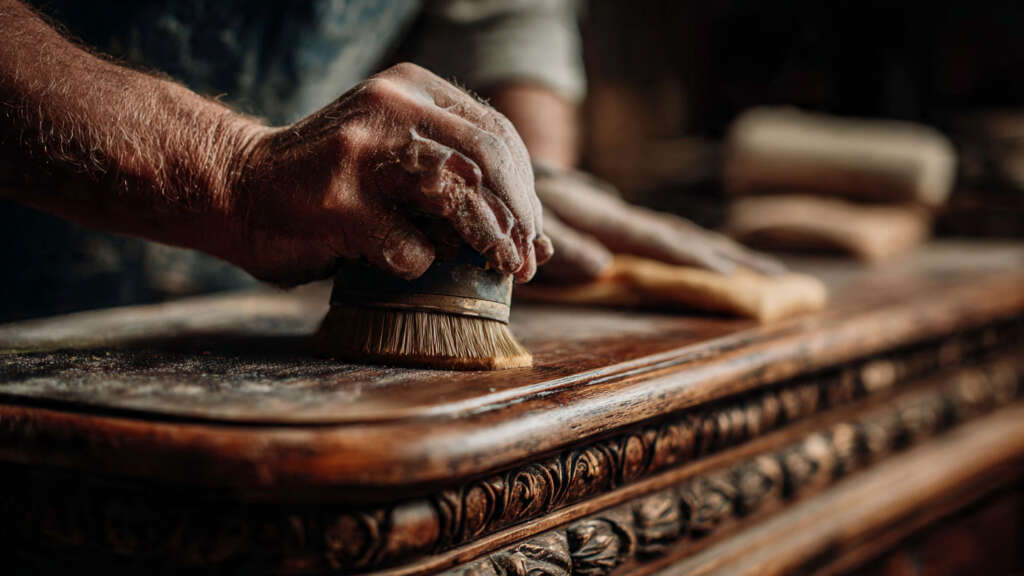
Rockler is the most widely accessible specialist woodworking class provider in the US, with locations in most major cities. Their class format divides into two categories: Workshops (technique-focused instruction covering table saw use, router operation, finishing, joinery, and bowl turning) and Make & Take Classes (project-based sessions where beginners complete a finished project under guidance with no experience required). Beginner workshops typically run 1–2 hours at around $25; multi-session advanced classes covering cabinet building or CNC woodworking run $100–$200.
The Woodworking 101 session — covering safe table saw, miter saw, and router use — is the ideal starting point for homeowners who’ve never used power tools but want to tackle carpentry or furniture projects confidently.
Woodcraft is one of the oldest woodworking supply chains in the US (founded 1928) and offers classes at more than 60 store locations nationwide. Like Rockler, they serve all skill levels from absolute beginners (cutting boards, basic safety, tool orientation) through to advanced joinery and cabinet work. Woodcraft instructors often have professional backgrounds in furniture making and cabinet making, making the technical depth higher than store-associate-taught sessions.
Makerspaces are community-based workshops that provide access to professional-grade tools, table saws, drill presses, laser cutters, 3D printers, and welding equipment for a monthly membership fee. They’re one of the best-kept secrets for homeowners who want to develop practical skills in a supported environment without purchasing expensive equipment. Most makerspaces also offer beginner orientation classes that teach safe equipment use before allowing independent access. Start with an easy win; this DIY carpet cleaner recipe is affordable and incredibly effective.
Makerspaces vary enormously by city — some are non-profit community organisations, some are commercial operations, and many are affiliated with libraries, universities, or community colleges. The common thread is access: members pay a monthly fee (typically $30–$100) to use shared tools and workshop space that would otherwise cost tens of thousands of dollars to replicate at home. Most spaces require a safety orientation before allowing access to power tools, which functions as a de facto beginner class.
For homeowners specifically, the most practical makerspace access is to the woodworking section — table saw, band saw, jointer, planer, router table — which lets you practice precise carpentry cuts and joinery on scrap wood before applying the same skills to actual home projects. Many makerspaces also offer organised project nights and skill-sharing workshops taught by experienced members.
Community colleges offer the most structured and depth-rich DIY education available to homeowners, with longer courses taught by credentialed instructors, covering topics from basic home maintenance through to carpentry apprenticeship preparation. Costs are higher than big-box workshops but significantly lower than private trade schools, and the instruction quality is typically the highest available outside of professional apprenticeships. As you progress past basic skills, there are advanced home repairs worth learning properly before attempting. Our garage door springs guide is a good example of where professional instruction genuinely matters.
The most effective approach combines both formats. Watch a detailed This Old House or Lowe’s tutorial to understand the full process and the potential complications before attending a workshop. You’ll get far more out of the in-person session if you already know the theory. Then use the hands-on time to practice the physical skill under supervision before attempting it at home.
| Skill Level | Best Starting Points | Suggested First Projects |
|---|---|---|
| 🟢 Complete Beginner | Home Depot or Lowe’s free in-store workshops; This Old House Homeowner 101 videos; Rockler Make & Take class | Painting a room, patching drywall, replacing a faucet |
| 🟡 Some Experience | Udemy structured courses; Rockler Woodworking 101; community college single-session workshops | Tile backsplash, basic carpentry shelving, garden bed construction |
| 🟠 Intermediate | Community college continuing education; local makerspace membership; Woodcraft advanced classes | Bathroom renovation, deck building, cabinet installation, flooring |
| 🔴 Advanced DIYer | Community college trade-adjacent courses; specialist makerspace programmes; Rockler CNC or advanced joinery | Kitchen remodel, electrical panel work (with permit), custom furniture building |

Most in-store workshops and makerspace sessions provide the tools you need during class. For practicing at home and tackling real projects, building a basic tool kit progressively is more economical than buying everything up front. Start with the essentials that cover 80% of common home projects, then add specialised tools as specific needs arise.
🔵 Tool-buying tip: Buy your first cordless drill from Milwaukee, DeWalt, or Makita mid-range professional brands available at any home improvement store. Budget drills from unknown brands strip and break quickly. A quality 18V drill costs $80–$150 and will last 10+ years. It’s the one tool in a beginner’s kit where brand quality genuinely matters from day one.
Yes, for beginners working on specific projects, they’re genuinely useful. The instruction quality depends heavily on the individual associate running the session, so results vary by location, but the basic format of “watch a technique demonstrated, then try it” is effective for practical skills like tile cutting, drywall mudding, or painting technique. The biggest value is having a knowledgeable person available to answer specific questions about your actual project. Bring a photo of what you’re working on and use the session as much for Q&A as for instruction.
Search “[your city] + makerspace” or “[your city] + community workshop” for local options. The website makerspaces. make.co maintains a national directory. Many public library systems now host maker programmes. Check your library’s events page. University campuses and community colleges often have publicly accessible maker facilities that don’t require student enrollment. If you can’t find anything locally, some community colleges with building trades programmes allow community members to use workshop space through their continuing education division.
This Old House’s free video library is the strongest starting point for most homeowners. The content is practical, expert-presented, and covers the full process of real projects rather than simplified demonstrations. For structured learning where you want a curriculum rather than individual videos, Udemy’s home repair courses are the best value, particularly when on sale (which is frequently). The combination of This Old House for specific project research and a Udemy comprehensive course for foundational knowledge covers most of what a homeowner needs before progressing to hands-on practice. One of the best beginner DIY projects is installing floating shelves without drilling. Here’s how.
For understanding a process, the sequence of steps, what to watch out for, and what tools are needed, online content is excellent and sometimes better than an in-person class. For developing muscle memory with tools, handling awkward physical situations (a tight space, an unusual angle, a material that behaves unexpectedly), and building the confidence to use a power tool at full speed, there’s no substitute for supervised hands-on practice. The ideal approach is: research online first, then practice in person, then apply at home.
Free options exist at every skill level and cover a surprising range of topics. Home Depot and Lowe’s in-store workshops, This Old House and Lowe’s online video libraries, and YouTube channels like This Old House’s YouTube presence are all free and high-quality. If you want structured curriculum content, Udemy courses regularly go on sale for $10–$15. Woodworking-specific workshops at Rockler or Woodcraft run $25–$200, depending on length and complexity. Community college continuing education courses typically cost $50–$400 for multi-session programmes. A makerspace membership at $30–$100/month gives ongoing access to professional tools and sometimes includes beginner classes.
If you’ve never taken a DIY class before, start with a free Home Depot or Lowe’s in-store workshop on a skill related to a project you’re actually planning. The combination of watching a technique demonstrated and then trying it yourself, even briefly, produces more confidence than hours of watching a video alone. Bring your specific project question and treat the session as much as a consultation as a class. Your first hands-on workshop is the starting point; from there, you can apply your new skills to real home repairs and maintenance with far more confidence than before.
For ongoing skill development, a makerspace membership or community college continuing education course is the most substantive investment available. Both give you access to professional tools and experienced instruction that you can’t replicate with online content, and both pay for themselves quickly if they let you tackle projects you’d otherwise have paid a contractor to do.
The online platforms This Old House, Udemy, and Lowe’s how-to library work best as complementary resources: use them to prepare before an in-person session, or to research a specific technique before applying it at home for the first time.
For more DIY guides and home maintenance advice, explore our DIY & Home Hacks section.