Physical Address
304 North Cardinal St.
Dorchester Center, MA 02124
Physical Address
304 North Cardinal St.
Dorchester Center, MA 02124
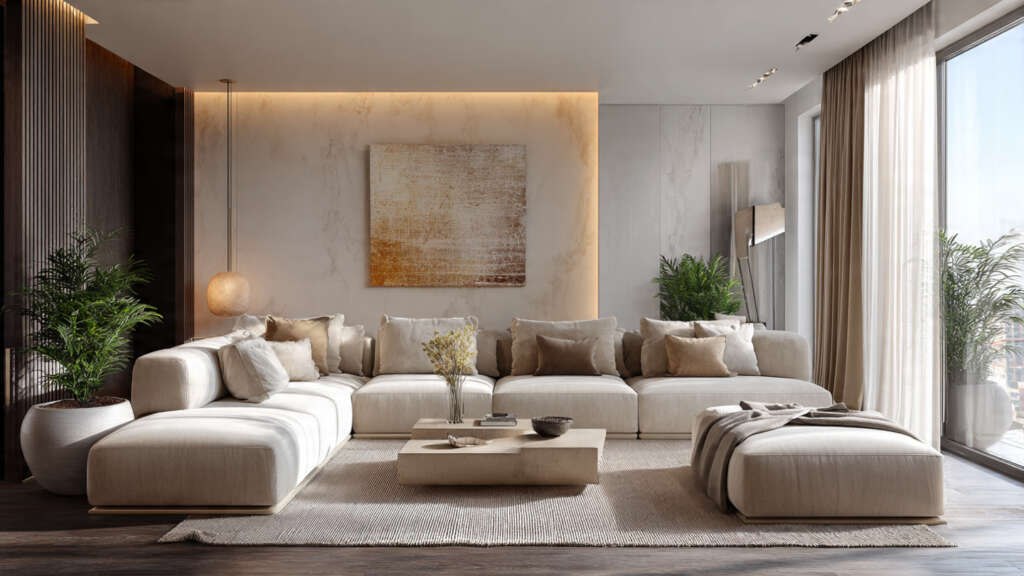
Walk into any furniture showroom, and you’ll see both modular sofas and sectionals filling the floor space with sprawling comfort. From a distance, they can look almost identical, large, multi-piece seating arranged in L or U shapes. But the way they work in a real home is fundamentally different, and choosing the wrong type is an expensive mistake that most people don’t discover until after delivery day.
This guide cuts through the showroom appeal and gives you what you actually need: a clear explanation of how each type works, where each genuinely wins, what they cost at different quality levels, and a straightforward decision framework based on your room, your lifestyle, and how long you plan to stay put. Complete your living room setup with the perfect mid-century modern TV stand to complement your new sofa.
The standard explanation is that modular sofas are “flexible” and sectionals are “fixed.” That’s true, but it undersells what the distinction actually means in practice. The more useful way to think about it: a sectional sofa is designed to be placed and forgotten, while a modular sofa is designed to evolve alongside your life.
A sectional sofa arrives as a small number of large, coordinated pieces, typically a main sofa body and an attached chaise or corner section that connect once and stay connected. The result feels solid and seamless, like one unified piece of furniture. You pick the configuration at purchase, have it delivered, place it in the corner, and that’s where it lives. This is genuinely how most households use their sectionals, and for many people, it’s exactly right.
A modular sofa is built from individual, independent modules: corner pieces, armless seats, chaise sections, ottomans that connect using clips, brackets, or friction bases. You can rearrange them into different configurations, add more modules later, or separate pieces entirely for different rooms. The trade-off is that this flexibility comes at a cost: modular sofas require connector hardware that introduces potential weak points, they can shift or drift apart over time on slick floors, and they typically cost more than equivalent sectionals.
You can often configure a modular sofa into a sectional shape, but a traditional sectional cannot be made truly modular. If flexibility matters to you now or might matter in the future, you cannot retrofit it into a sectional.
There’s also a third category worth knowing about: the hybrid approach. Some brands now sell what are essentially sectional-shaped configurations from modular systems, giving you the seamless look of a sectional with the option to reconfigure if circumstances change. IKEA’s FINNALA, Burrow’s Nomad, and Albany Park’s Kova all straddle this line, and for many buyers, they represent the sweet spot. If you love a relaxed living space, these beachy decor ideas pair beautifully with modular sofa arrangements.
| Factor | 🟢 Modular Sofa | 🟤 Sectional Sofa | Winner |
|---|---|---|---|
| Flexibility | Rearrange anytime, add modules later, separate into individual pieces | Fixed layout, repositioning means moving the whole sofa | Modular |
| Moving & delivery | Individual modules navigate tight doorways, stairs, and hallways easily | Large sections can be challenging; measure doorways carefully | Modular |
| Stability & feel | Can drift or separate; quality depends heavily on the connector design | One cohesive structure, no gaps, no shifting, rock-solid | Sectional |
| Price | Higher upfront cost; can grow piece-by-piece over time | Harder to clean under; it depends on the upholstery type for covers | Sectional |
| Cleaning & maintenance | Pull pieces apart to clean underneath; many have removable/washable covers | Harder to clean under; depends on upholstery type for covers | Modular |
| Visual coherence | Can look slightly segmented visible joins on some models | Can look slightly segmented, with visible joins on some models | Sectional |
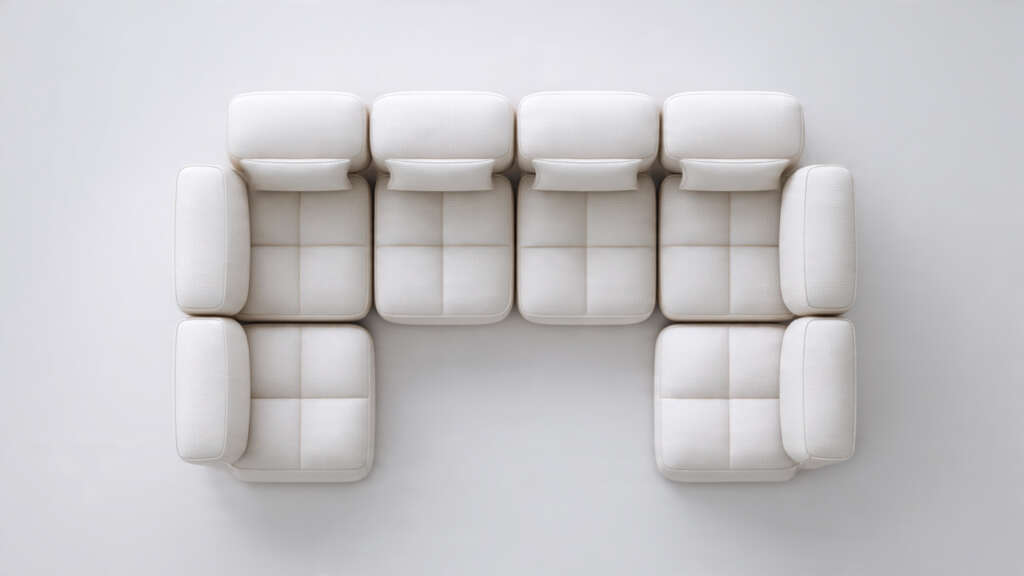
Modular sofas are genuinely excellent for the right household. The flexibility is real and meaningful: being able to add a chaise module when a baby arrives, reconfigure into a U-shape for a film night and back to an L-shape for daily use, or move individual sections through a narrow Apartment Therapy’s tested reviews of top modular sofas these are advantages that make a meaningful difference in how you live.
But there are honest trade-offs that the marketing glosses over. Connector quality is everything. The pieces of a modular sofa are held together by clips, brackets, slide-in rails, or friction bases, and the quality of these connectors determines whether your sofa feels like one piece of furniture or like a collection of pieces that drift apart every time someone sits down heavily. Budget modular sofas with weak connectors are genuinely frustrating to live with. The best systems, like Lovesac’s heavy steel U-clamp design, for example, hold together so firmly that you’d never know the sofa was modular. Cheaper alternatives can feel exactly as assembled as they are.
The other honest limitation is that modular sofas are not visually seamless. The joins between modules are visible to varying degrees depending on the design. For some people in some rooms, this matters; for others, it doesn’t. Worth seeing in person before committing to a style that prioritises a clean silhouette. Before buying your sofa, compare prices at the best affordable furniture stores available in 2026.
🔵 Modular buying tip: If piece sliding is your main concern, look for models with metal or rubber connectors that lock modules firmly, and add non-slip furniture pads under each module on hard floors. For apartment dwellers specifically, the ability to move each module independently through a narrow doorway or up a spiral staircase is worth a significant price premium over an equivalent sectional.
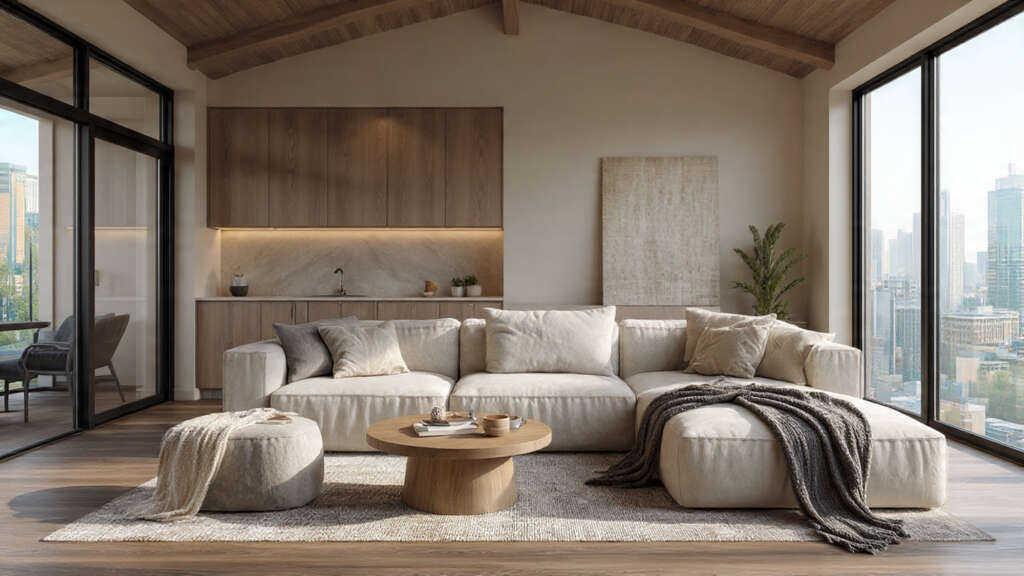
Sectional sofas get a slightly unfair reputation as the “boring” choice in the modular-vs-sectional conversation. But for a large portion of homeowners, particularly those with dedicated, stable living rooms, a sectional delivers better value and a better result than a modular alternative at the same price point.
The unified construction of a sectional means no drift, no seams, no connector maintenance, and typically a more coherent design aesthetic. For households that value a “set it and forget it” approach to living room furniture, particularly families with young children who need a stable, low-maintenance seating solution, a quality sectional bought once and kept for a decade often represents better long-term value than a modular system that requires ongoing investment in additional modules.
The genuine limitation is what happens when circumstances change. If you move to a home with a differently shaped living room, the sectional that fitted perfectly in the old space may not work in the new one at all. Sectionals are an investment that commits you to a particular room configuration, which is fine if your living situation is stable, and a real problem if it isn’t.
⚠️ Measure before you fall in love. The most common and most expensive sofa buying mistake is ordering a sectional that won’t fit through the front door, around the hallway corner, or into the room. Measure your doorway width, any hallway turns, staircase width if relevant, and the final room placement, including walkway clearance of at least 36 inches on all sides. Tape the dimensions on the floor before ordering. This applies equally to modular and sectional sofas.
Price ranges in this category are enormous, from under $500 for a basic sectional to over $10,000 for a fully configured Lovesac Sactional. Understanding what you get at each level helps calibrate expectations before you walk into a showroom.
Budget ($500–$1,500): IKEA’s SÖDERHAMN, FINNALA, and VALLENTUNA modular systems are genuinely functional, with washable covers, good entry point. Expect engineered wood frames and less durable connectors. The FINNALA full U-shaped configuration comes in under $2,000, making it one of the best value modular options available. Suitable for 3–7 years of regular use.
Mid-range ($1,500–$3,500): Burrow Nomad (from ~$1,364 for a starter sofa, more for full sectional configurations), Albany Park Kova (deep seats, feather blend cushions, popular in apartments), Castlery Jonathan. Good connector systems, performance fabrics, and genuinely modular expandability. Expect 7–12 years of quality life.
Premium ($3,500–$10,000+): Lovesac Sactionals ($2,000–$10,000 depending on configuration). The system that changed the modular category machine-washable cover system, steel clamp connectors that hold rock-solid, a lifetime frame warranty, and the ability to expand indefinitely. Worth the premium specifically for households that expect their space to change multiple times. 7th Avenue Modular and West Elm Harmony also sit in this range with strong quality credentials. Once you’ve decided which type suits you, see our guide to where to actually buy affordable sofas and sectionals in 2026.
Budget ($600–$1,800): Ashley Furniture sectionals (living room sets from ~$799), Wayfair during Way Day sales, IKEA VIMLE. Accessible comfort, good enough for family use, with limited longevity on cheaper fabric options. Fine for 3–5 years.
Mid-range ($1,800–$4,000): Pottery Barn Basic Sectional, Crate & Barrel sectional lines, La-Z-Boy power reclining sectionals. Solid construction, better foam density, and more upholstery options. Expect 8–15 years with proper maintenance.
Premium ($4,000+): Restoration Hardware cloud sectionals, BenchMade Modern, made-to-order from Joybird or Maiden Home. Heirloom-quality construction, genuine solid hardwood frames, and custom upholstery. These are decade-plus investments.
The most reliable way to avoid a sofa disaster is to measure before you fall in love with a style. This applies to both modular and sectional sofas, but the specific measurements matter for different reasons in each case.
The right sofa type also depends on your home’s overall style — see how your home’s architectural style should inform furniture choices.
For the right household, yes. The premium is justified if your living situation is likely to change, whether that’s moving home, growing your family, or simply wanting the ability to reconfigure your space. If your room layout is fixed and stable, a quality sectional delivers more seating per dollar and a more coherent design. The key is being honest about which category you actually fall into, rather than buying flexibility you’ll never use.
Cheap modular sofas with weak connectors do drift and separate. This is a genuine and common frustration. Quality modular sofas with robust connector systems (metal brackets, steel U-clamps, or wide rubber bases) hold together reliably for years. Lovesac’s Sactional modular system is widely regarded as the most secure in the category. Adding non-slip pads under each module on hard floors prevents the majority of drifting issues regardless of brand.
Burrow Nomad and Albany Park Kova are the most popular choices for apartment dwellers. Both ship in manageable boxes that fit in standard vehicles, assemble tool-free in under 30 minutes, and navigate narrow doorways that defeat large sectionals. IKEA’s FINNALA offers a significantly cheaper option for a 5–7 year horizon. The key advantage of any modular sofa in an apartment isn’t just layout flexibility, it’s the ability to physically get the furniture in and out of the building.
Yes, and this is exactly what many buyers do. An L-shaped or U-shaped modular configuration is visually identical to a sectional from across a room. The difference is only apparent close-up (visible joins between modules) and in how the sofa feels underfoot (the slight movement between pieces on some models). If you want the sectional look with modular flexibility, mid-range modular systems like Burrow or Albany Park achieve this well.
Modular sofas have a practical advantage for households with children and pets: many quality models (especially Lovesac, 7th Avenue, and Burrow) have machine-washable or easily replaceable covers, a significant maintenance advantage. The ability to pull pieces apart for deep cleaning underneath is also genuinely useful. That said, a quality sectional with performance fabric (stain-resistant, tightly woven) is equally practical for family use if you’re not in the washable-cover camp. Pottery Barn’s performance fabric sectionals are specifically well-regarded for family households.
A well-made sofa with a solid hardwood or metal frame, high-density foam (2.0+ lb density), and quality fabric should last 10–15 years with normal use. Budget sofas with particleboard frames and standard foam typically last 3–5 years before cushions lose their shape and frames develop squeaks. The cushion foam density is the single biggest durability indicator. Premium sofas use 2.5 lb density foam or foam-and-down blends that maintain their shape significantly longer than the 1.5–1.8 lb foam common in budget options.
Modular sofas and sectionals both make excellent living room furniture in the right context. Modular wins clearly for renters, frequent movers, growing families, and anyone with narrow building access. Sectional wins for stable homeowners who want maximum seating per dollar, a seamless unified look, and zero ongoing maintenance.
The most common mistake is buying a modular sofa for the flexibility idea, while actually using it exactly like a sectional, never reconfiguring it once it’s placed. If that describes you, spend the price difference on a better-quality sectional and invest in superior fabric and foam construction instead.
Whichever you choose: measure your doorways and hallways before you order, tape out the footprint on your floor before you fall in love, and prioritise cushion foam density and frame material over surface aesthetics. Those factors determine whether you’re still happy with your sofa in five years.
For more furniture buying guides and living room inspiration, explore our Furniture Inspiration section.