Physical Address
304 North Cardinal St.
Dorchester Center, MA 02124
Physical Address
304 North Cardinal St.
Dorchester Center, MA 02124
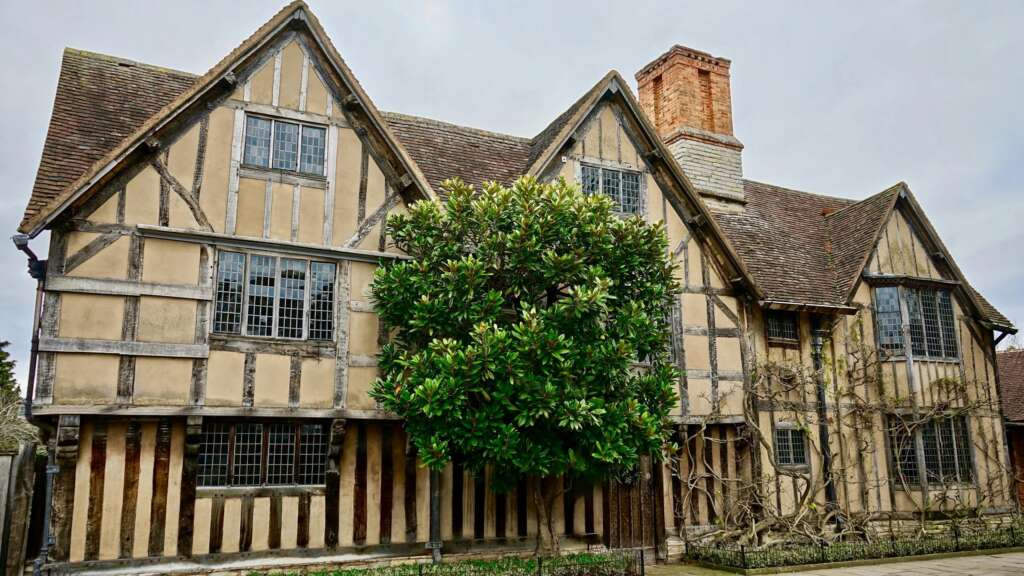
Few architectural styles command attention quite like a Tudor Revival home. With its steeply pitched rooflines, exposed timber framing, and fairytale arched doorways, the Tudor house has captivated homeowners for over a century. But this is not your grandmother’s dark, heavy manor anymore. Black window frames are a defining feature of modern Tudor homes. Browse these black windows exterior ideas for inspiration.
The modern Tudor style house is having a genuine revival, one driven not by nostalgia, but by a real hunger for homes that feel rooted, distinctive, and full of character. Whether you’re buying, building, or renovating, this guide covers everything you need to know about Tudor architecture in 2026. Much like the A-frame house, the Tudor thrives on a signature roofline.
“Modernizing a Tudor doesn’t mean erasing its history — it means editing it. The best renovations keep the texture, lighten the palette, and let the bones do the talking.”
Tudor architecture first emerged in England during the reign of the Tudor monarchs (1485–1603), characterized by bold timber framing, asymmetrical builds, and steeply pitched gables rooted in medieval construction. When it crossed the Atlantic, the style became a symbol of prosperity, so much so that American Tudor Revival homes built during the 1920s and 1930s were nicknamed “Stockbroker Tudors,” reflecting the affluence of their original owners.
Today’s modern Tudor borrows the soul of those originals. The dramatic rooflines, the arched doorways, the half-timbered facade, but strips away the heaviness. Clean lines replace ornate carving. Oversized black-framed windows replace tiny diamond-paned glass. Reclaimed wood and fiber cement replace stucco that cracks. The result is a home that feels both timeless and genuinely livable. If Tudor style appeals to you, the modern cottage design offers a similarly cozy yet stylish architectural aesthetic.
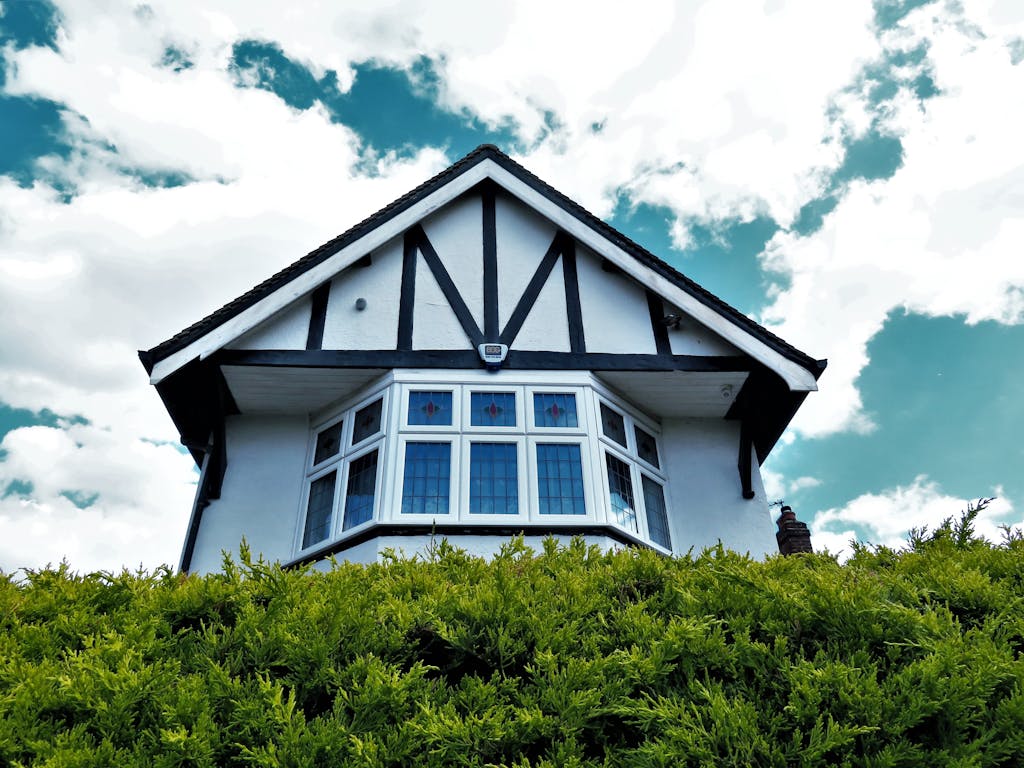
Walk past a Tudor home, and you’ll recognize it instantly. The exterior is defined by a specific vocabulary of architectural details that, even in their modern interpretation, remain unmistakable.
The high-angled, multi-gabled roofline is the most defining Tudor feature. In modern builds, gables are simplified but still dramatic, often with clean metal or slate roofing materials.
Exposed wooden (or faux-wood fiber cement) beams set against white stucco. Today’s versions use cleaner, more minimal beam patterns compared to the intricate originals.
The rounded or pointed Tudor arch at the entrance is a non-negotiable element, often framed in stone or brick for maximum curb appeal. It’s the feature that gives the home its storybook quality.
Modern Tudors swap small leaded glass panes for oversized, energy-efficient casement or double-hung windows, often grouped in dramatic tall expanses and framed in matte black steel.
Large chimneys with decorative brickwork remain a hallmark detail, though contemporary homes often simplify the chimney pot ornamentation while keeping the visual weight.
Stone or brick on the ground floor, stucco with timber above, this two-tone material split is a classic Tudor composition that modern designers still use to great effect.
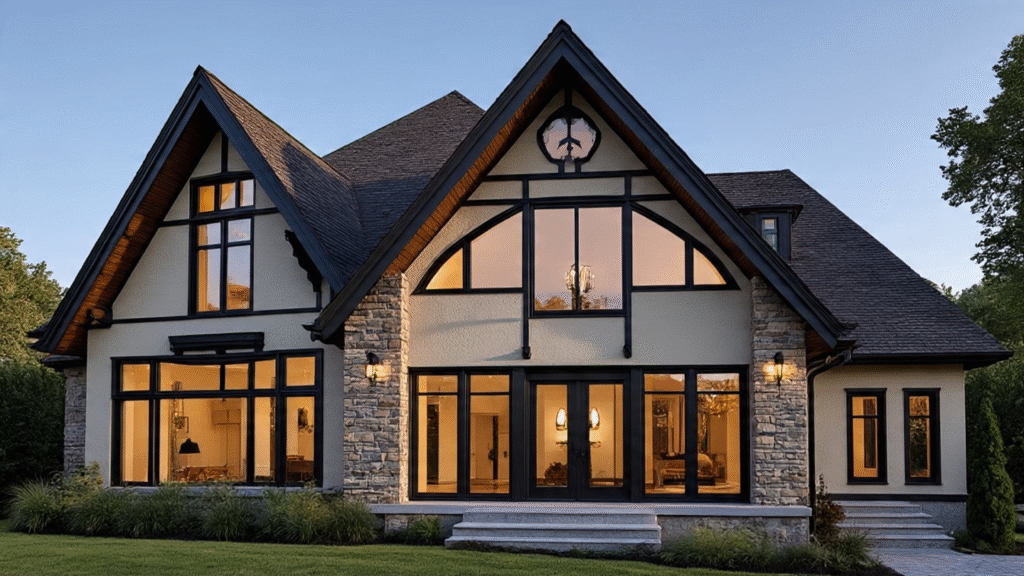
Getting the color palette right is everything. A Tudor home’s historic character is either honored or undermined by its exterior finish choices. In 2026, the most popular palettes balance the home’s inherent drama with approachable, livable tones.
One important note on materials: traditional stucco, while beautiful, is prone to cracking and moisture damage over time. Many modern homeowners are replacing it with fiber cement panels (like James Hardie board), which replicate the half-timbered look with far greater durability and much less maintenance.
This is where many Tudor renovations go wrong. Light, airy interiors are a principle shared with coastal home styles. Owners either strip out all the original character in pursuit of a modern look, or they keep everything and end up with dark, cramped rooms that feel stuck in another century. The answer lies in selective editing.
“The goal isn’t to make a Tudor home look like a new build. It’s to keep what makes it extraordinary the beams, the fireplace, the arches and let the rest breathe.”
Lighten the palette, keep the texture. Original Tudor interiors relied heavily on dark wood paneling that absorbs light. The modern approach is to replace dark paneling with soft lime-washed plaster or painted walls in warm whites and creams, while retaining the beamed ceilings. This transforms the feel of a room without touching its bones.
Open the floor plan strategically. Original Tudor homes were a series of small, compartmentalized rooms, a product of their era. Rather than knocking down every wall, the best renovations identify one or two key openings (usually between kitchen and dining, or living and dining) to improve flow. Wide, arching thresholds that echo the Tudor arch motif are a particularly elegant way to connect spaces. Tudor homes look stunning surrounded by greenery. Explore the best small trees for landscaping to complete the look.
Let the fireplace lead. Every great Tudor interior has a fireplace as its centerpiece. In 2026, the trend is either a restored original stone inglenook or a sleek plaster surround that nods to the Tudor tradition without literal reproduction. Either way, it should be the focal point of the main living space.
Upgrade the windows. Replacing small original windows with larger, energy-efficient casements framed in black steel or black-painted wood is one of the highest-impact changes you can make. It floods dark Tudor rooms with natural light and connects the interior to the landscape outside.
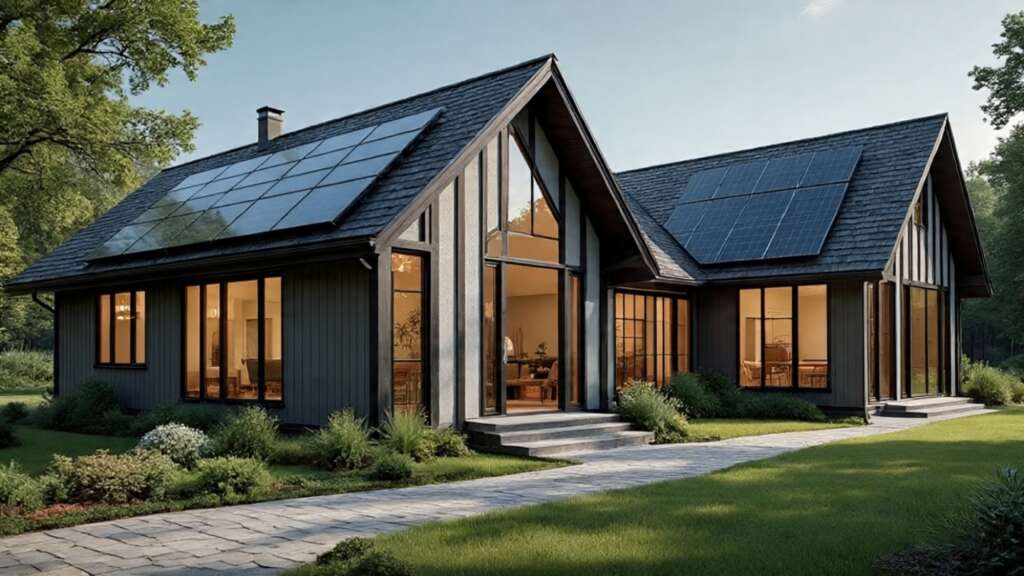
Not every Tudor is a mansion, and that’s a big part of the style’s renewed appeal. Compact Tudor homes, sometimes called Tudor cottages, are having a genuine moment in 2026, driven by the broader “cottagecore” aesthetic trend and a renewed interest in charming, character-filled homes over generic new builds.
Small Tudor homes typically under 1,800 square feet offer a remarkable amount of architectural drama for their size. The steep gabled roof and arched entry give them an extraordinary street presence on even the narrowest urban lot. Internally, smart open-concept layouts, built-in storage, and lofted bedrooms make excellent use of the available space. For first-time buyers and downsizers alike, they represent a genuinely distinctive option at an accessible price point.
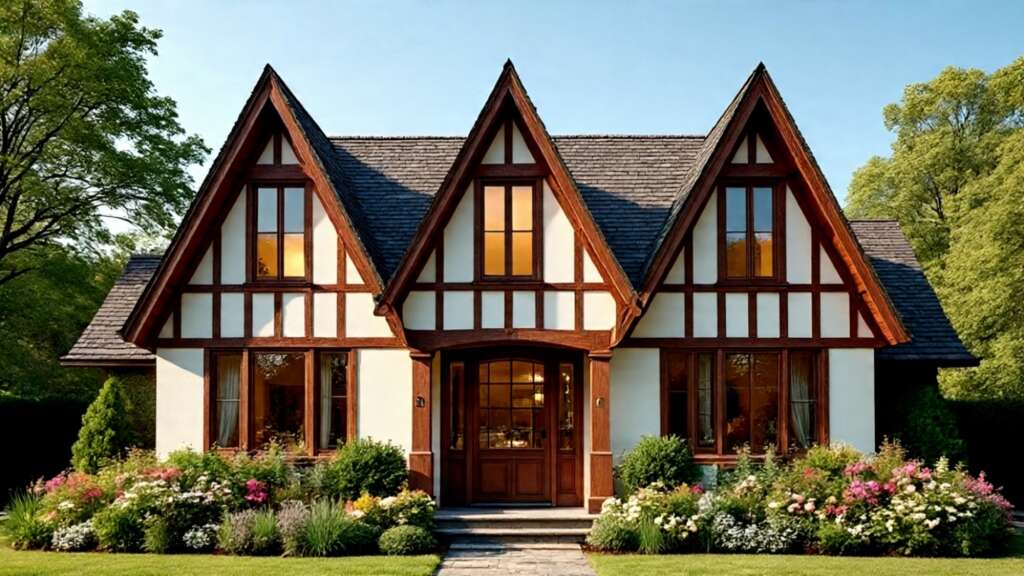
At the opposite end of the scale, luxury Tudor homes remain one of the most sought-after architectural categories in premium real estate. Their appeal is simple: in a world of bland luxury builds, a well-executed Tudor estate stands apart completely.
Modern luxury Tudors in 2026 go well beyond traditional aesthetics. Expect cathedral ceilings with exposed timber trusses, grand stone staircases, spa-calibrated bathrooms with heated stone floors, wine cellars, and fully integrated smart home systems, all housed behind a facade that a medieval architect might have drawn. Outdoor spaces extend this drama with formal pergolas, reflecting pools, fire pits, and climbing plant features on stone boundary walls.
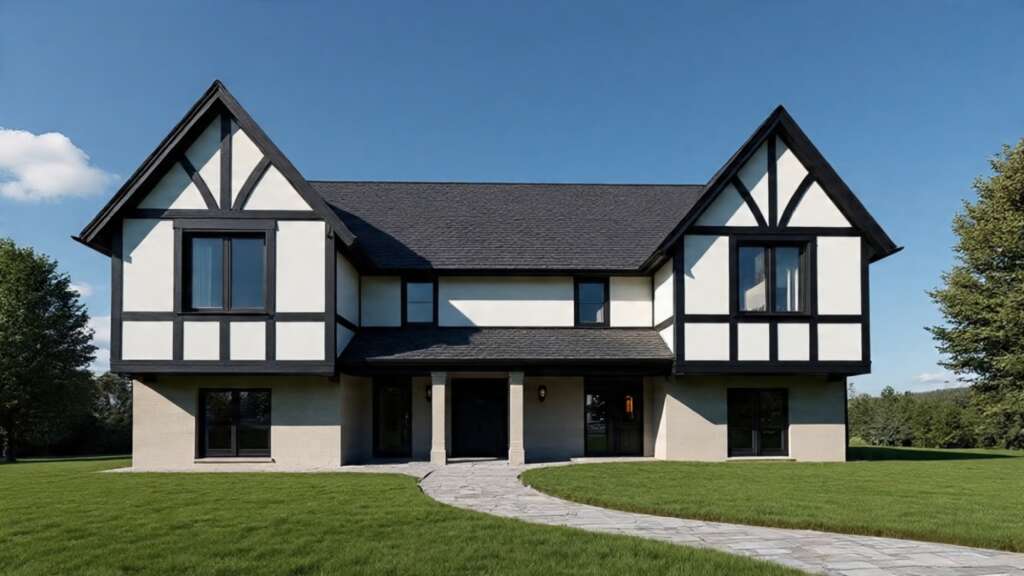
The exterior of a Tudor home is a stage, and the landscaping is its setting. The right planting and hardscaping can make a good Tudor look extraordinary — and the wrong choices can undermine everything the architecture is trying to say.
Cottage gardens, similar to what you’d find in a modern cottage design, are a natural companion to Tudor architecture. A loose, abundant planting of roses, lavender, hydrangeas, and alliums along the front path softens the home’s structured geometry and adds a deeply English sensibility. The key is controlled looseness, not a tidy row of identical shrubs, but layered planting with varied heights and textures.
Stone pathways made from reclaimed slate or irregular flagstone lead the eye to the arched front door in a way that feels entirely intentional. Avoid concrete pavers; they break the historic spell immediately.
Boxwood hedging and climbing plants, ivy, wisteria, and climbing roses add structure and romance. A well-placed wisteria trained across the front facade can transform the entire character of a Tudor exterior by late spring.
Lighting is an often-overlooked element. Iron lantern-style wall sconces flanking the entry, low-level path lighting, and uplighting on the facade’s half-timbering details can make a Tudor home look spectacular after dark.
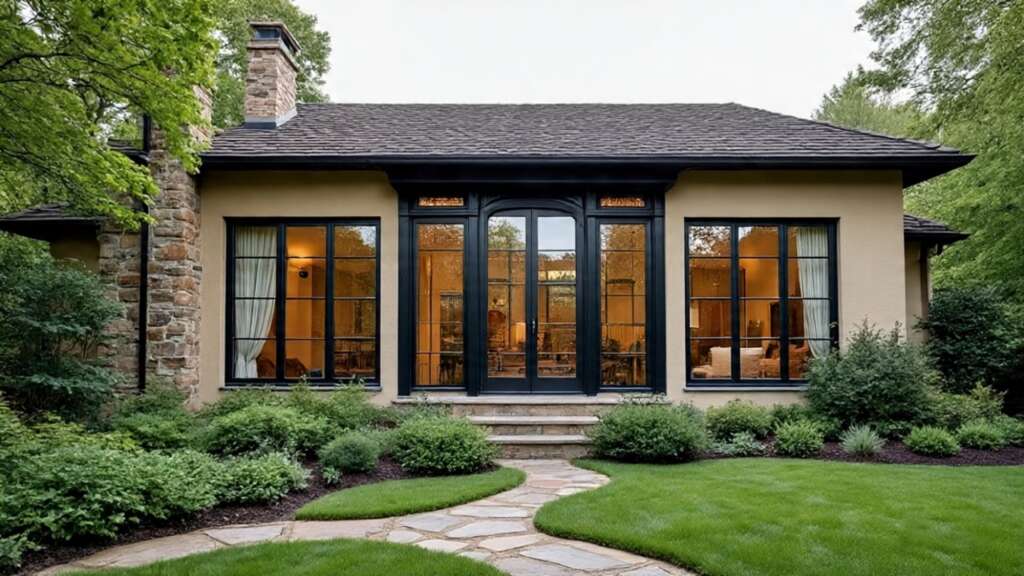
Tudor architecture has always been tied to natural materials, timber, stone, brick, and lime-based plaster. That relationship makes the style a surprisingly natural fit for sustainable building in 2026.
Reclaimed wood is an ideal choice for both decorative half-timbering and interior beams. It brings genuine aged character, unique grain, and natural weathering that new timber simply cannot replicate. Reclaimed oak beams, in particular, are increasingly in demand for Tudor renovations.
Fiber cement siding (such as James Hardie board) has become the material of choice for updating Tudor exteriors. It replicates the look of traditional stucco and timber with dramatically better performance, no cracking, no rot, no swelling from moisture, and can be factory-finished in virtually any color.
Energy-efficient windows are another area where modern materials significantly improve on the original. Today’s black-framed casement windows can be manufactured with double or triple glazing, thermally broken frames, and low-E coatings, meaning the largest visual upgrade also delivers the largest energy saving.
Slate and metal roofing mimics the original look while offering superior longevity. A quality metal roof on a Tudor home can last 50 years or more, compared to 20–25 years for standard asphalt shingles.
Costs vary significantly by region and specification, but modern Tudor homes typically run between $200–$400 per square foot for new construction in the US, with luxury builds exceeding that. The decorative exterior details, half-timbering, arched stonework, and steep rooflines do add to the build cost compared to a simpler home style.
Traditional Tudors were not particularly energy efficient, but modern Tudor homes can be built or renovated to excellent energy performance standards. Key upgrades include proper wall and roof insulation, triple-glazed windows in period-appropriate frames, and modern HVAC systems. Smaller Tudor footprints also naturally reduce heating and cooling loads.
A traditional Tudor Revival home (1910s–1940s) features ornate masonry, small leaded-glass windows, dark, heavy interiors, and complex half-timbering patterns. A modern Tudor simplifies and streamlines those same elements, cleaner timber patterns, oversized black steel windows, open-plan interiors, and sustainable materials, while retaining the core architectural DNA.
Yes, and increasingly so. After years of generic farmhouse and coastal styles dominating the market, many homeowners and architects are turning to Tudor architecture for its genuine character and distinctiveness. Search interest in Tudor Revival homes has grown significantly over the past three years.
The modern Tudor style house isn’t just a trend, it’s a genuine architectural movement rooted in a desire for homes with real character and history. Whether you’re drawn to the storybook charm of a compact Tudor cottage, the grandeur of a luxury estate, or simply want to renovate an existing Tudor to breathe new life into it, the principles are the same: honor the bones, lighten the palette, and let the architecture do the work.
Done well, a modern Tudor home is one of the most distinctive and enduring things you can build or buy. In a neighborhood of sameness, it will always stand apart.